
Last updated November 15, 2026
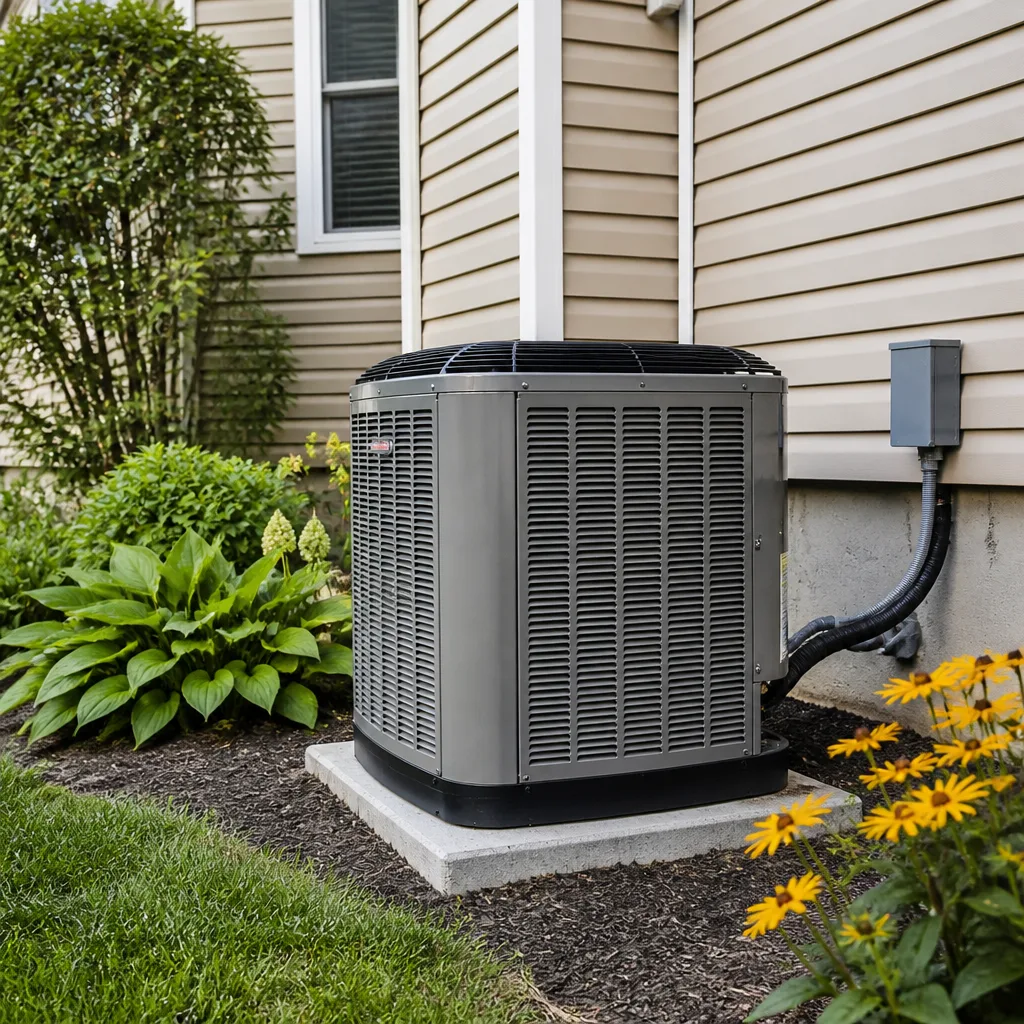 AC repair
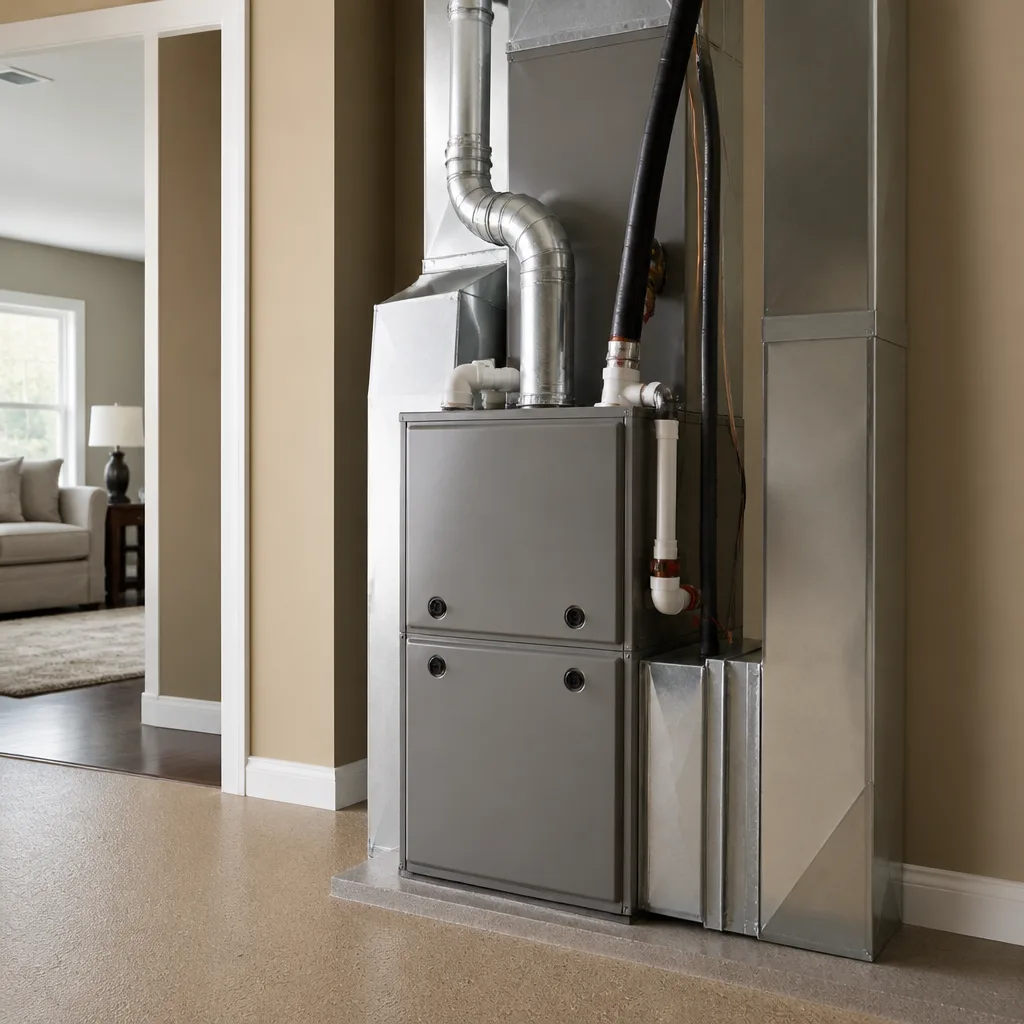 Furnace & heating
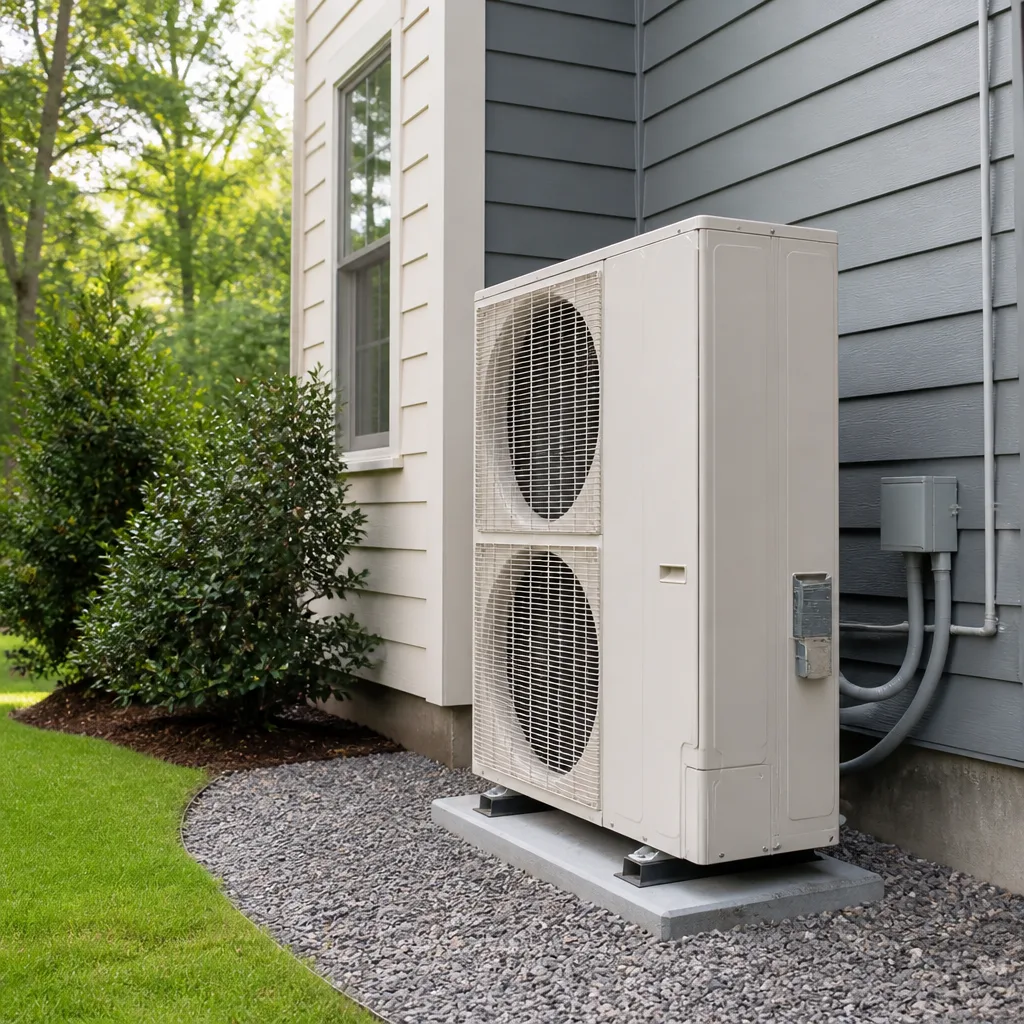 Heat pumps
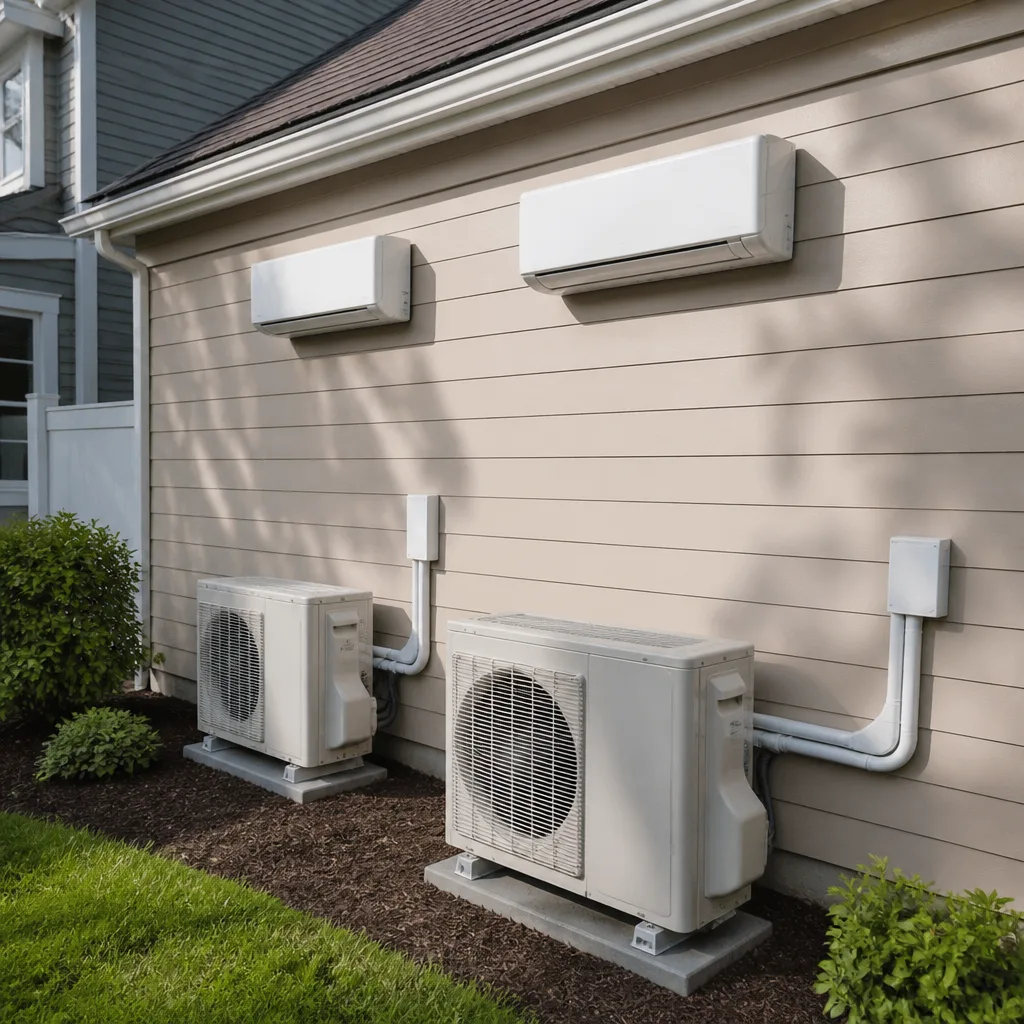 Ductless mini splits
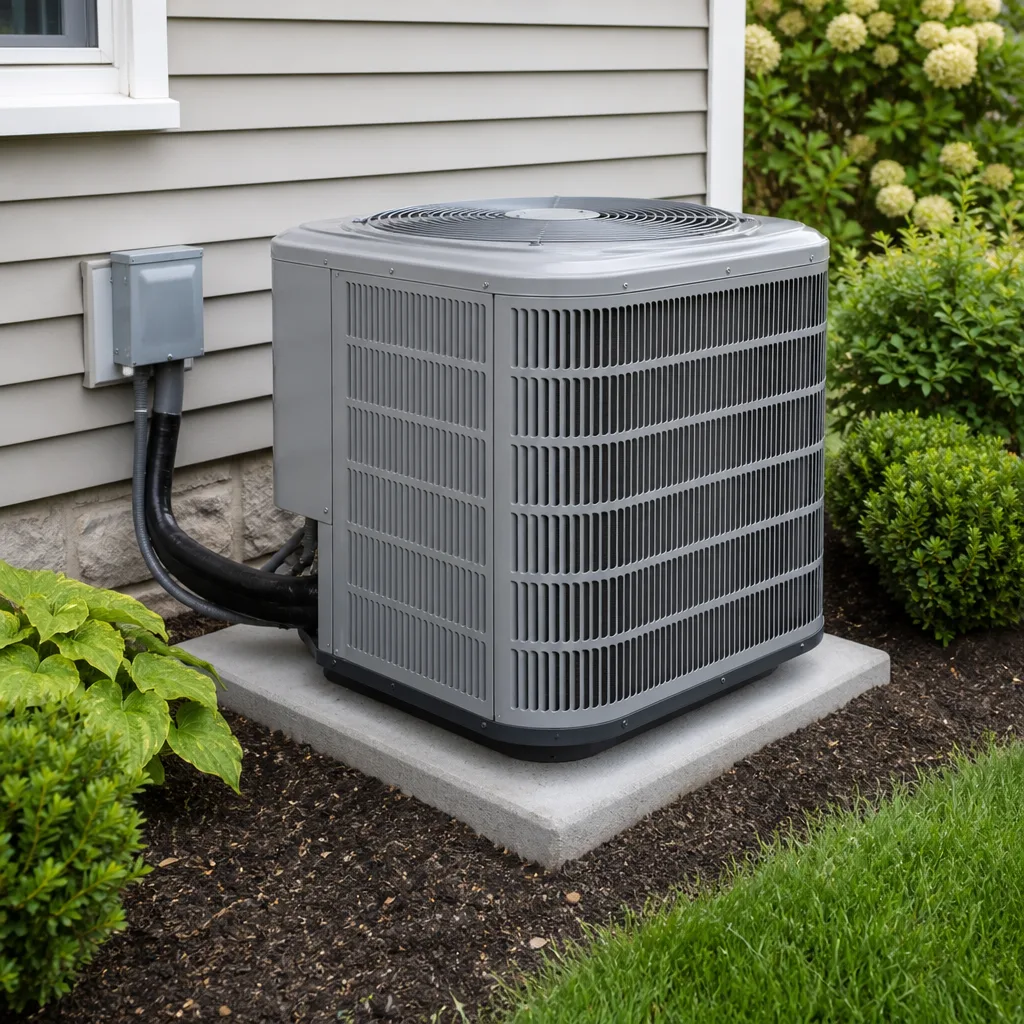 Carrier
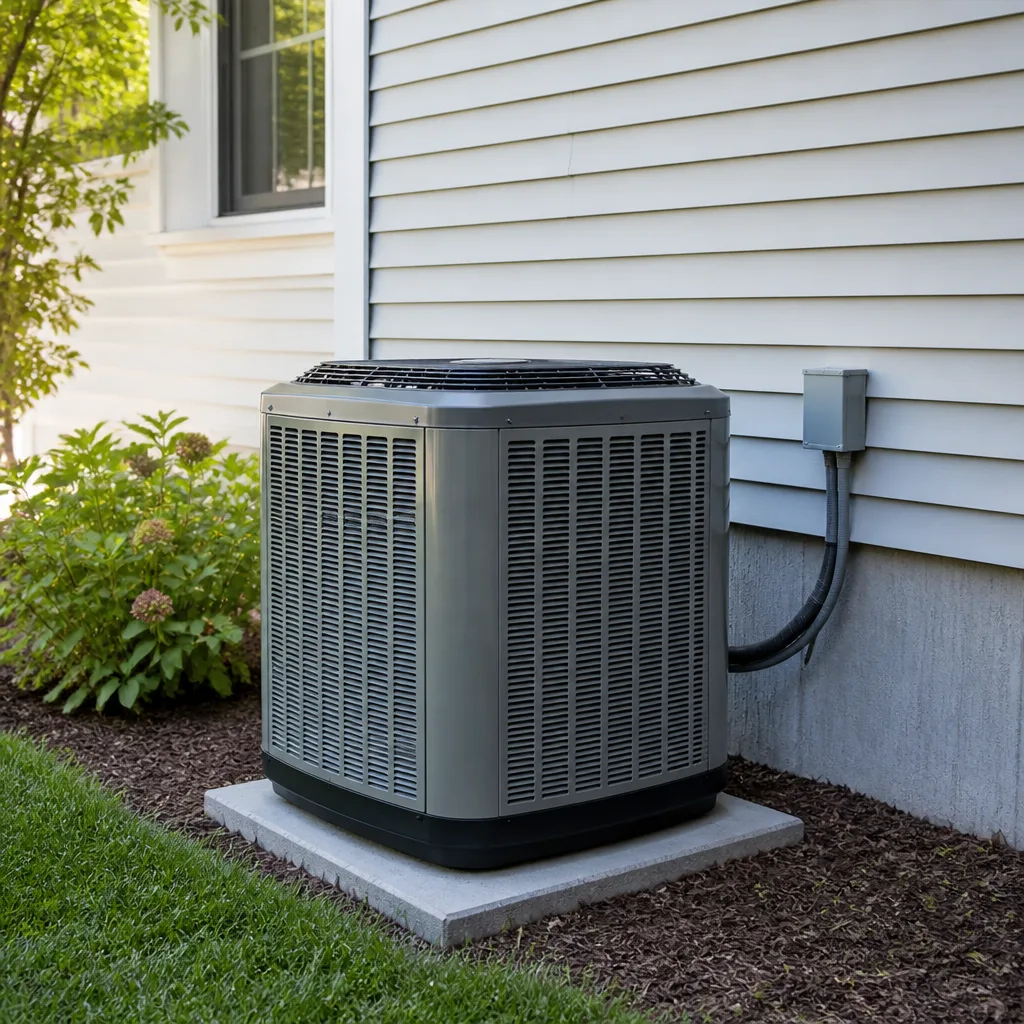 Trane
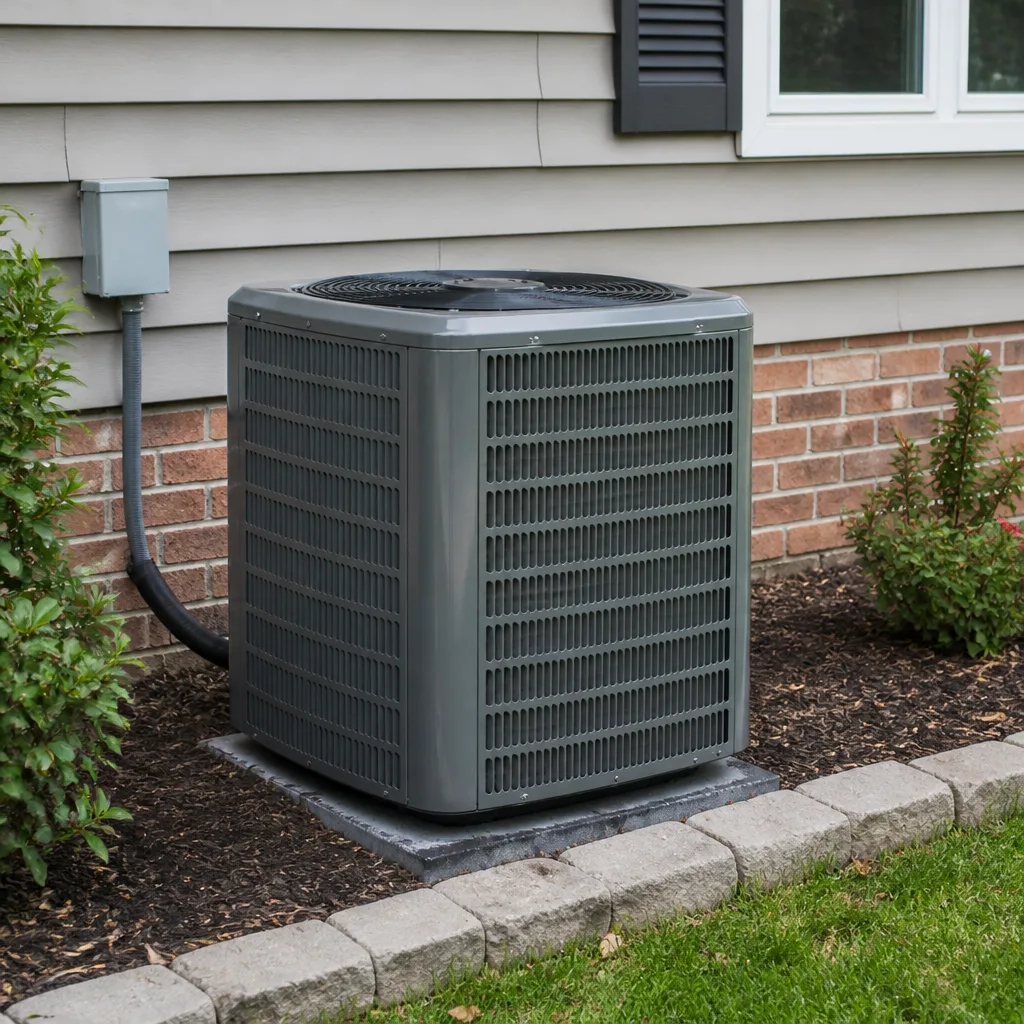 Goodman
Seasonal tune-up and full diagnostic on your Carrier, Trane, or Goodman system - readings shown to you before any repair is proposed
Diagnosis first, numbers second - you approve the repair price before a single part goes in.
Get your free estimateHow to Hire an HVAC Contractor in Pearland: A Step-by-Step Guide
Here’s a practice that’s more common in residential HVAC than most homeowners realize: technicians get dispatched with a replacement goal, and an older-but-serviceable system gets a quote built to make repair look like the irrational choice. Nobody hands you that quota sheet, but you can hear it in the conversation. The good news is you don’t need a coupon or a lucky referral to protect yourself. You need five questions, a public licensing database, and a working knowledge of how quotes get stacked. This guide walks you through hiring an HVAC contractor in Pearland the way we’d walk a neighbor through it: verify credentials, read the quote line by line, and compare apples to apples before you sign.
Quick Answer
To hire an HVAC contractor in Pearland, verify the company’s TACL license class on the Texas Department of Licensing and Regulation (TDLR) database, ask which brands they stock parts for, demand a written itemized quote that references a Manual J load calculation for any replacement, and confirm in the contract that the contractor pulls the permit and documents equipment startup. Skip any quote with vague line items, “builder grade” language and no specs, or a push toward full replacement without a documented diagnosis of the failure.
Styles & brands we work with
- AC repair
- Furnace & heating
- Heat pumps
- Ductless mini splits
- Carrier
- Trane
- Goodman
Table of Contents
- Step 1: Verify the Contractor’s Texas HVAC License
- Step 2: Spot a Brand-Captive Shop Before You Book
- Step 3: Read the Quote Like a Contractor
- Step 4: Compare Quotes on Equal Terms
- Step 5: Get the Right Clauses in the Contract
- Step 6: Recognize Quote Red Flags
- Step 7: Decide Whether to Call a Pro or Wait
- Frequently Asked Questions
Step 1: Verify the Contractor’s Texas HVAC License
Texas doesn’t let just anyone charge you to work on your air conditioner. HVAC contracting is regulated by the Texas Department of Licensing and Regulation (TDLR), and the license you want to see is a TACL (Texas Air Conditioning Contractor License). There are tiers within that system, and the class tells you who can legally enter into the contract with you and who can only work under that contract. The short version: the A tier (unlimited) and B tier (limited to systems below a certain capacity) are the classes that matter for residential hiring. A technician-only license (Class C) lets someone do the work but doesn’t authorize them to contract with you directly.
You don’t have to take anyone’s word for it. Here’s how to check, and it takes about two minutes:
- Go to the TDLR online license search (tdlr.texas.gov) and choose the Air Conditioning and Refrigeration Contractors license type.
- Search by the company name and the city. Pearland contractors show up under the city they list.
- Confirm the license status reads “Active,” not “Expired” or “Suspended.”
- Note the license class. For a residential replacement, A or B is what you’re after.
- Cross-check the name on the license against the name on the quote. If they don’t match, ask why.
While you’re there, look for insurance. Texas requires a certificate of insurance on file for licensed contractors, and a legitimate shop will happily email you a copy of their certificate without a five-email runaround. If the response is something about “we’re going through a rebrand,” brush off the question and move on. This step takes less time than a phone call to a bad contractor will cost you later.
One more thing: the license belongs to the company, not the truck. A friendly tech with a business card and a van isn’t the same as a licensed contractor. If the tech shows up unannounced and no one at the company you called can tell you the license number, that’s a real signal. When you schedule AC repair, ask for the license number on the confirmation. For any Pearland homeowner hiring for the first time, this is the single most important check. The rest of this guide builds on it.
Step 2: Spot a Brand-Captive Shop Before You Book
A surprisingly large number of HVAC companies in Texas are set up around one or two brands. There’s nothing shady about selling one brand. The problem is when the business model makes replacement the only profitable path and repair stops being a real option. That’s the trap this section is about. A brand-captive shop will usually still quote you a repair, but the quote will be built in a way that makes the repair look like the worse deal. You’ll see it in the numbers: a “repair” that lands unusually close to a replacement price, or a replacement quote that comes with a “today only” framing.
The proxy question we recommend: “What brands do you stock parts for on the truck?” The answer tells you almost everything about how the shop operates.
- Good sign: “We carry parts for the major brands we work on – Lennox, Trane, Goodman, Rheem, and a few others – and if we don’t have it we know where to get it the same day.”
- Good sign: “We focus on residential systems; our techs work on the equipment that’s actually in your house.”
- Yellow flag: “We specialize in one brand.” Not a red flag on its own, but ask what happens if your system isn’t that brand.
- Red flag: “We don’t stock parts; we order everything.” Doesn’t mean bad – but it does mean longer waits and higher markups on parts.
- Red flag: The answer doesn’t match the equipment in your home, and the tech starts steering the conversation toward a specific new unit before looking at yours.
The reason this question works is that a piece of equipment is a system of branded and universal components. A Trane compressor, a Goodman capacitor, a Rheem blower motor – the equipment in Pearland homes is a mix, and a shop that truly works across brands can diagnose what’s in front of them instead of guessing based on a preferred brand catalog. We work on nine major brands: Carrier, Trane, Lennox, Goodman, Rheem, York, Daikin, Bryant, and American Standard. The reason we structured the business that way is simple: a homeowner shouldn’t have to wonder whether their equipment is “supported” before they can get a repair. Nine brands. One call.
Step 3: Read the Quote Like a Contractor
A quote is a document, and documents tell you things the contractor hopes you won’t read closely. Here’s what a solid quote contains, and what each part does for you:
- Diagnosis statement: a specific description of the failure – “failed dual run capacitor,” not “your system is struggling.” If the diagnosis is vague, the quote is the wrong thing to grade.
- Line-item parts and labor: the parts are named and priced, the labor is described (hours, type of work), and the total is itemized, not one lump sum.
- Model and serial numbers: for a replacement quote, the exact model of the outdoor unit, indoor coil, and (if included) air handler. Not “14 SEER system.” Not “builder grade.”
- SEER2 rating and refrigerant type: named in the quote. This matters more than ever due to the R-410A / R-454B transition (more on that below).
- Permit-pull responsibility: a line that says the contractor will pull the permit, or a line that says the homeowner will. Blank means neither.
- Equipment startup documentation: a line confirming the contractor will provide commissioning data (static pressure, refrigerant charge, airflow) after install.
- Warranty terms: a written statement that outlines what’s covered, for how long, and by whom (manufacturer vs. contractor).
If a line item says “install labor” and nothing else, ask what it includes. If it says “builder grade” without a model number, ask for the spec sheet. If the quote references “Manual J” without showing you the number (or offering to walk you through it), the load calculation exists in name only. Any licensed contractor in Pearland should be able to produce all of this without drama.
One practical note: you can use the quote as a comparison tool. When you get three quotes on the same failing system, read all three. The one with the vague diagnosis is the one to be careful with. In our experience, the diagnosis statement is where a repair-first approach and a replacement-goal approach split. Look for it before your eyes glaze over at the numbers.
Step 4: Compare Quotes on Equal Terms
Three quotes landed in your inbox, and they don’t agree on anything. One says “14 SEER,” another says “SEER2 15.2,” a third shows a model number you’ve never heard of. The refrigerant listed might be R-410A on one and R-454B on another. This is where a lot of Pearland homeowners just pick the middle one and hope. Don’t. Comparing quotes is a patience exercise, and how you do it is what protects you. Here’s the process:
- Line up the SEER2 rating on every quote. SEER2 is the current efficiency standard (it replaced the older SEER metric in 2023). If any quote says just “SEER” without a 2, ask for the SEER2 number. A quote that says “high efficiency” without a number is a quote with no information.
- Match the capacity. Every replacement quote should reflect the Manual J load calculation for your home – tons of cooling needed, based on square footage, window load, insulation, and orientation. If two quotes propose different tonnage, one of them didn’t do the calc. Ask for the Manual J output for both.
- Check the refrigerant type. R-410A is the refrigerant that’s been standard in residential systems for years. R-454B is the newer, lower-GWP refrigerant being phased in on new equipment under EPA rules. New units may come in either, depending on manufacturer and timing. Ask each contractor which refrigerant the proposed unit uses, and whether the quote reflects any transition-specific equipment cost changes. A unit with an R-454B system isn’t automatically better than an R-410A unit – but you should know which you’re buying, and the quote should say.
- Verify model numbers. Look up the exact model on the manufacturer’s website before you compare prices. A “$6,000 system” and a “$6,500 system” mean nothing if the model numbers don’t match.
- Compare the scope of work. Is the indoor coil included? Is the thermostat replaced? Is a new pad and disconnect in the quote? Two quotes that look $1,000 apart can actually be $200 apart once scope is aligned.
- Compare warranty terms line by line. Labor warranty, parts warranty, compressor warranty. A 10-year parts warranty with a 1-year labor warranty is standard-ish; a “lifetime warranty” with no written detail is not a warranty at all.
Only after all that do you look at the total. The cheapest quote and the most expensive quote are almost never the same system. This is the piece that the “we’ll beat any quote” shops don’t want you doing, and the reason we’re brand-neutral about installations. We recommend the equipment that fits the home and the budget, and we put it in writing. Your job is to make sure every quote is answering the same question.
Step 5: Get the Right Clauses in the Contract
Two clauses matter more than the rest of the contract combined, and both get skipped when the paperwork comes in a rush. Get them in writing, in the contract, before the install date is set.
Clause 1: Permit-pull responsibility. In Pearland and virtually every Texas city, an HVAC replacement requires a permit, and the permit is what triggers inspection of the install. The clause should name which party is pulling the permit. If the contractor pulls it (as they should in almost every residential case), the permit number should appear on the contract or in the follow-up documentation. If the quote is silent on permits, ask directly. “We’ll handle paperwork later” is a red flag. A system that gets installed without a permit can complicate resale, insurance claims, and future warranty coverage.
Clause 2: Equipment startup documentation. After install, the contractor should provide documented commissioning data – the numbers that show the system is running at spec. This includes refrigerant charge verification, static pressure readings, and airflow. Ask for it in writing before you sign. It’s your evidence the system was running correctly on day one, which matters more than any single warranty for the next several years. We’ve seen plenty of systems that were “installed fine” and were actually low on charge from day one, slowly shortening the compressor’s life. The startup sheet is your proof against that.
Two smaller clauses worth having in the contract:
- Change-order clause: any work beyond the quoted scope requires your approval in writing (or signed change order) before it’s performed. This closes the door on $800 discovery fees.
- Removal and disposal line: the quote should state the contractor removes and disposes of the old equipment. It shouldn’t be assumed.
None of this is exotic. A licensed contractor in Pearland can produce a clean contract with these clauses in about one email. If getting them in writing feels difficult, that’s information, too.
Step 6: Recognize Quote Red Flags
Some of the signals are subtle, and some are obvious once you’ve seen them a few times. Here’s the short list of what should slow you down:
- Vague line items. A quote that says “labor” or “miscellaneous” without explaining what’s included. Everything on the quote should be specific enough that you could hand it to a second contractor and they’d know exactly what’s included.
- No Manual J reference for a replacement. A replacement quote without a load calculation is guesswork. Under-sizing produces short cycling; over-sizing produces humidity problems. Both will shorten system life in a Pearland summer.
- “Builder grade” without specs. This phrase is meant to signal a base model. It’s fine as a starting point, but the model number of the actual unit should still appear. If it doesn’t, you don’t know what you’re buying.
- A diagnosis without a component name. “Your system is failing” isn’t a diagnosis. A failed TXV, a bad compressor, a leaking schrader valve – those are diagnoses.
- Immediate pressure to decide. “We can only hold this price until this afternoon” is a sales tactic, not a legitimate pricing structure. A written estimate is a written estimate.
- Refusal to show the license number on request. No explanation is good enough for this one.
- Replacement quotes that arrive before the equipment has been tested. If a contractor shows up, looks at the air handler for ten minutes, and pitches a full replacement without testing refrigerant pressures, capacitors, or the compressor, they haven’t diagnosed anything.
One more, specific to our part of the country: a quote that doesn’t reference a Manual S (equipment selection) alongside Manual J. The Manual J tells you the size; the Manual S tells you whether the proposed unit will actually work in the home’s specific duct and airflow conditions. Both should appear on a well-built replacement quote. A quote with neither is a quote with a price and not much else.
Step 7: Decide Whether to Call a Pro or Wait
Some things can wait until morning. Others can’t. Here’s a road map:
Call now: No cooling during a Pearland summer heat advisory (outdoor highs reaching 100°F+), a gas smell near the furnace, a burning smell from the air handler, water pooling around the indoor unit, or a system that’s short-cycling every few minutes. Those combinations can go from inconvenient to expensive quickly – and in the case of a gas odor or burning smell, they’re genuinely unsafe to wait on.
Call in the next day or two: reduced cooling (still cooling, but not to setpoint), a furnace that won’t fire (but no gas smell), unusual noises on startup, or a system that trips the breaker intermittently. These are less urgent but shouldn’t be ignored because they tend to escalate.
Book a scheduled visit: a system that’s running but has “always been loud,” a home you’ve just bought and want to inspect before summer, or quotes you’re ready to compare for a planned replacement.
Pearland summers are humid and hot for a long stretch, and the transition to the cooler months happens gradually enough that a failing system in October is easy to ignore. It’s not the outdoor temperatures that do the most damage to a neglected AC – it’s running equipment through back-to-back weeks of high-demand cooling when airflow or refrigerant charge is already off. If something sounds, smells, or feels off, that’s the call. We answer 24/7. Fast dispatch, 7am-7pm.
See the difference
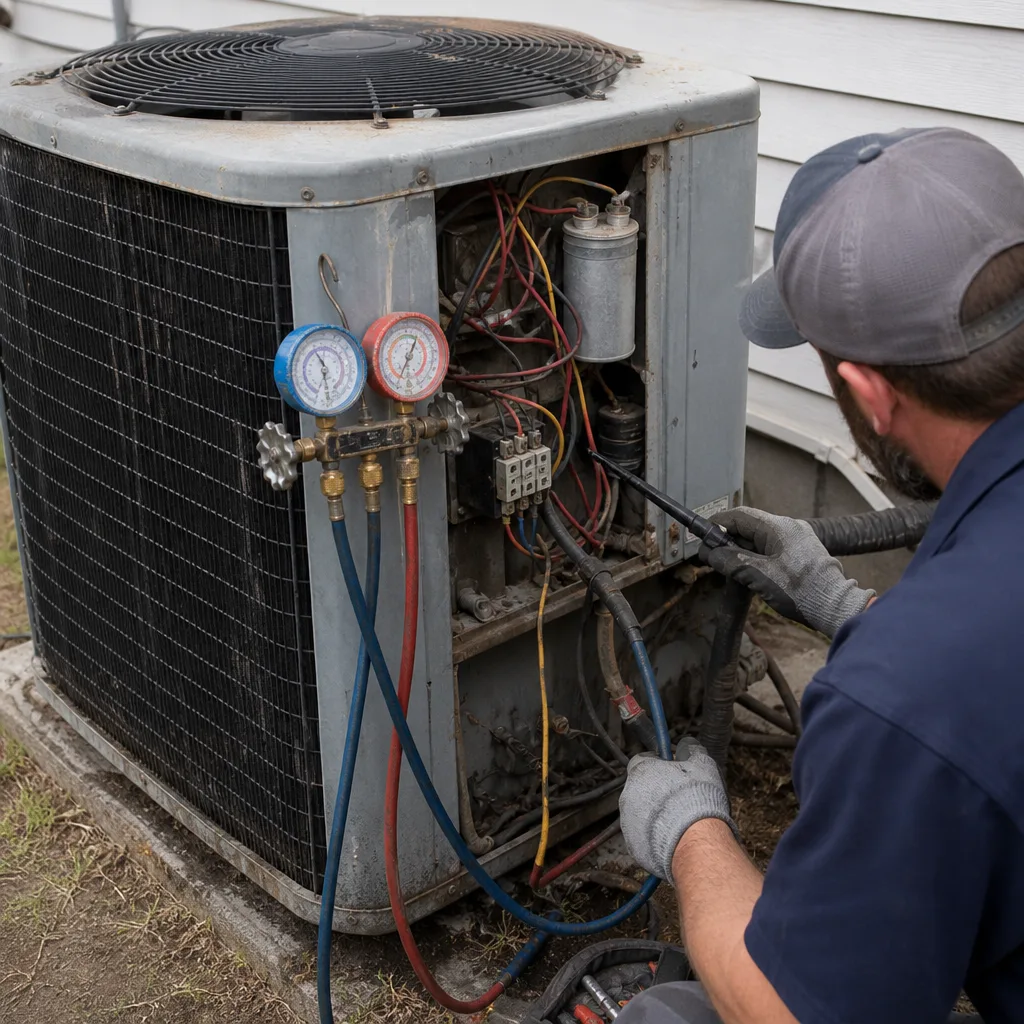 Before
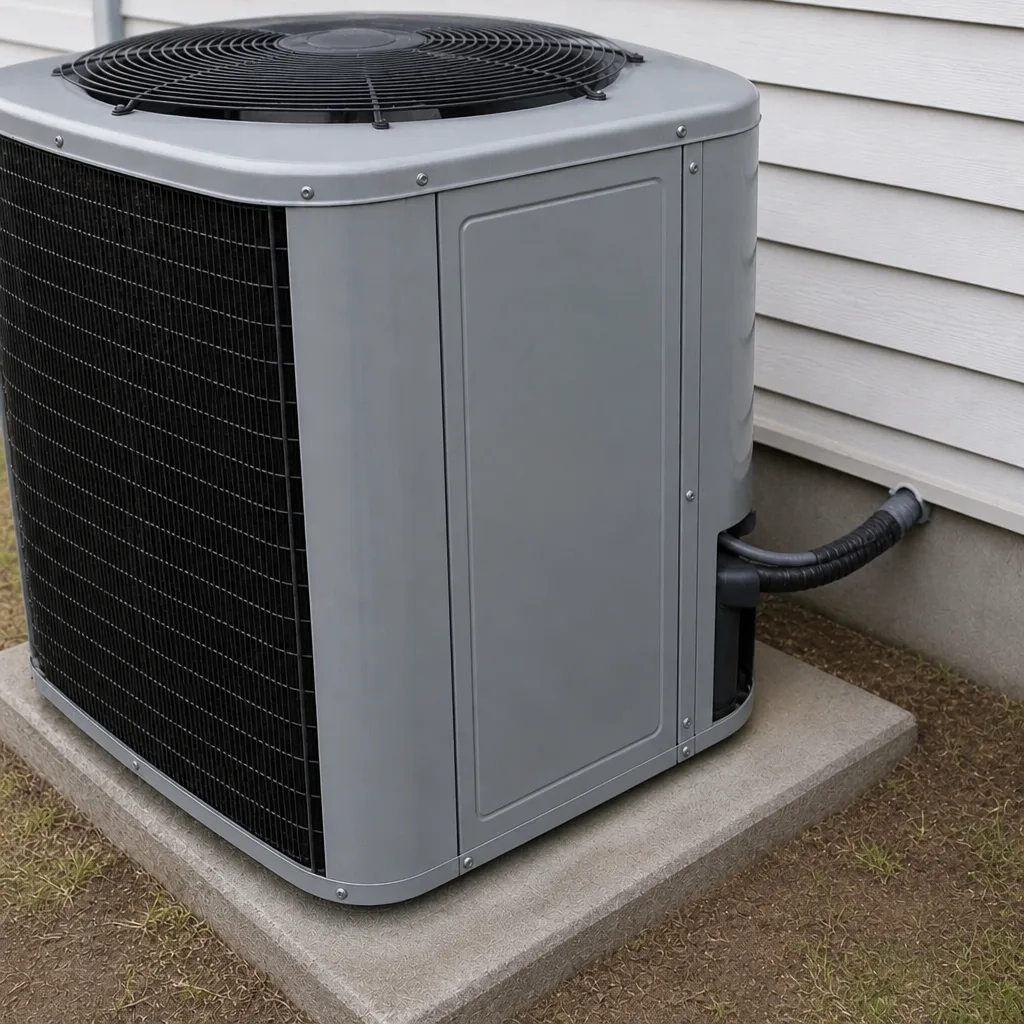 After
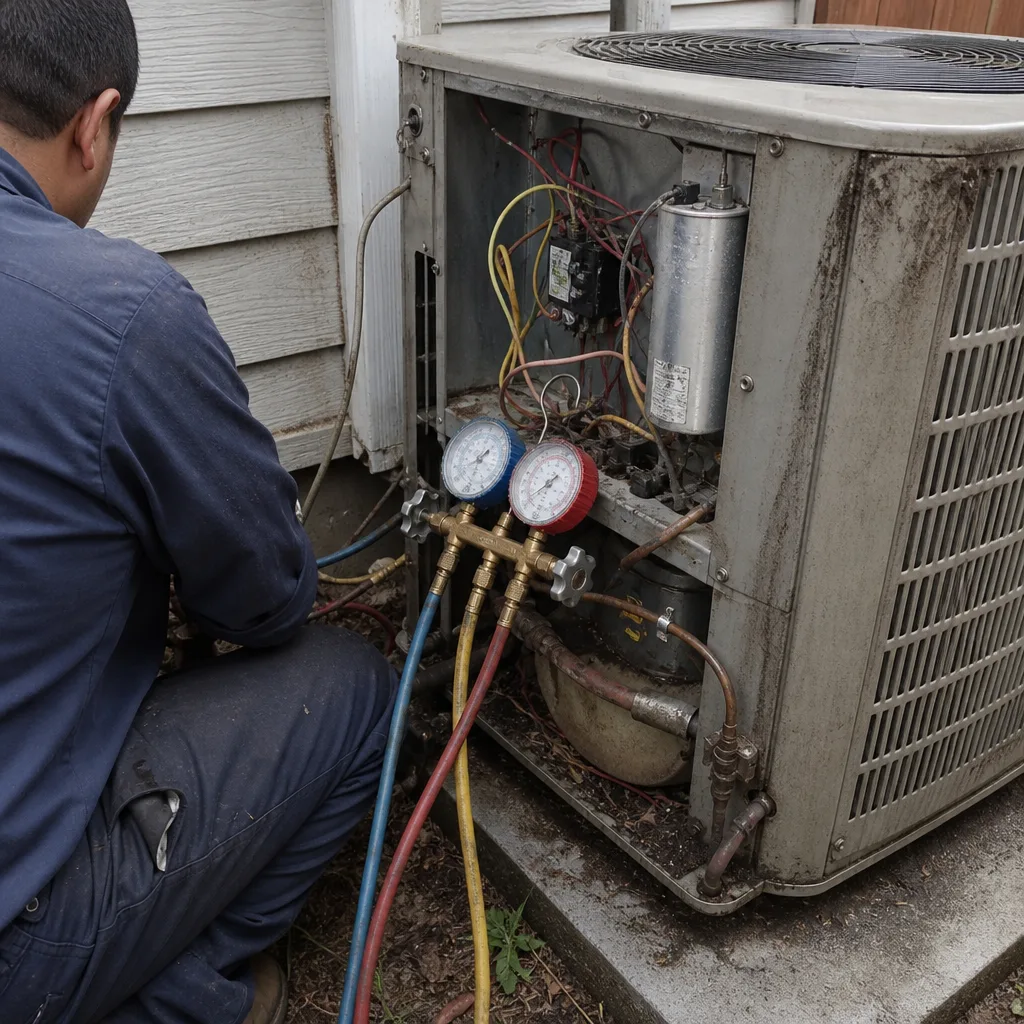 Before
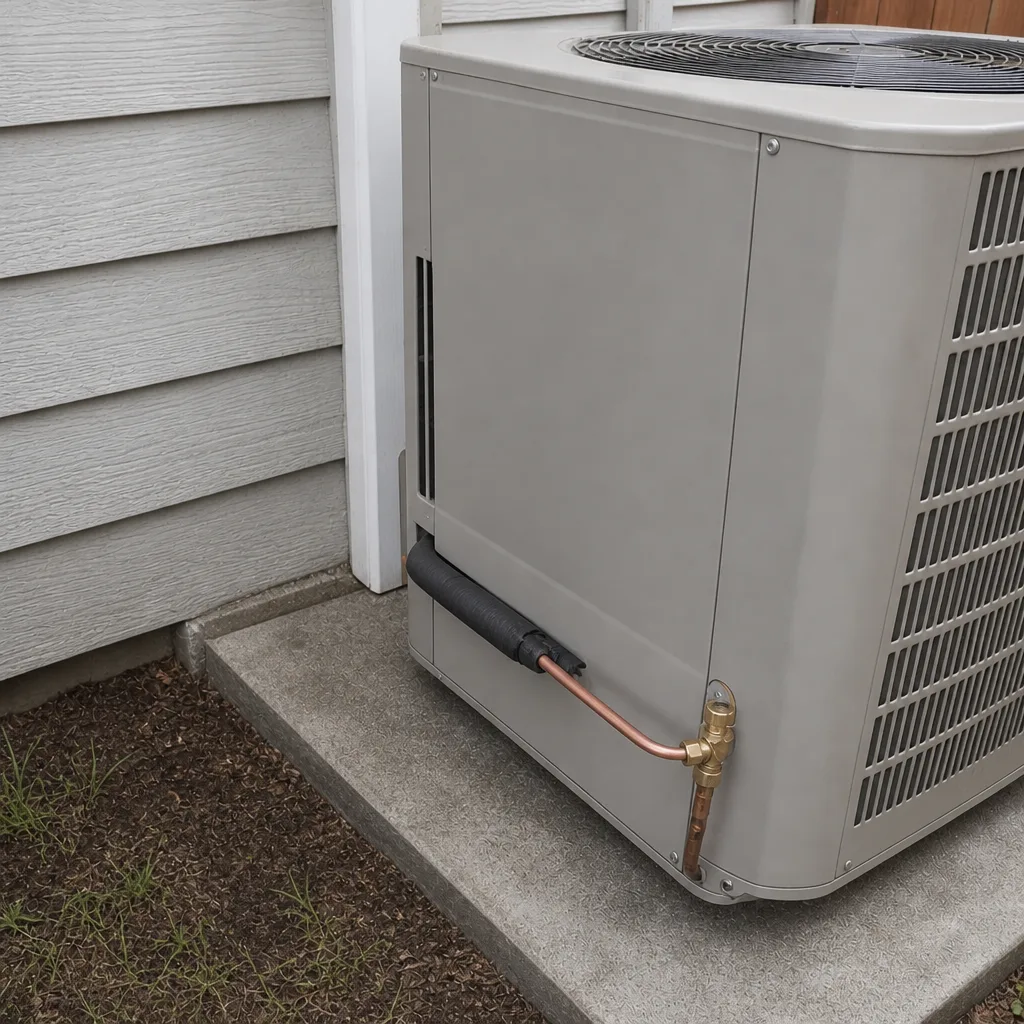 After
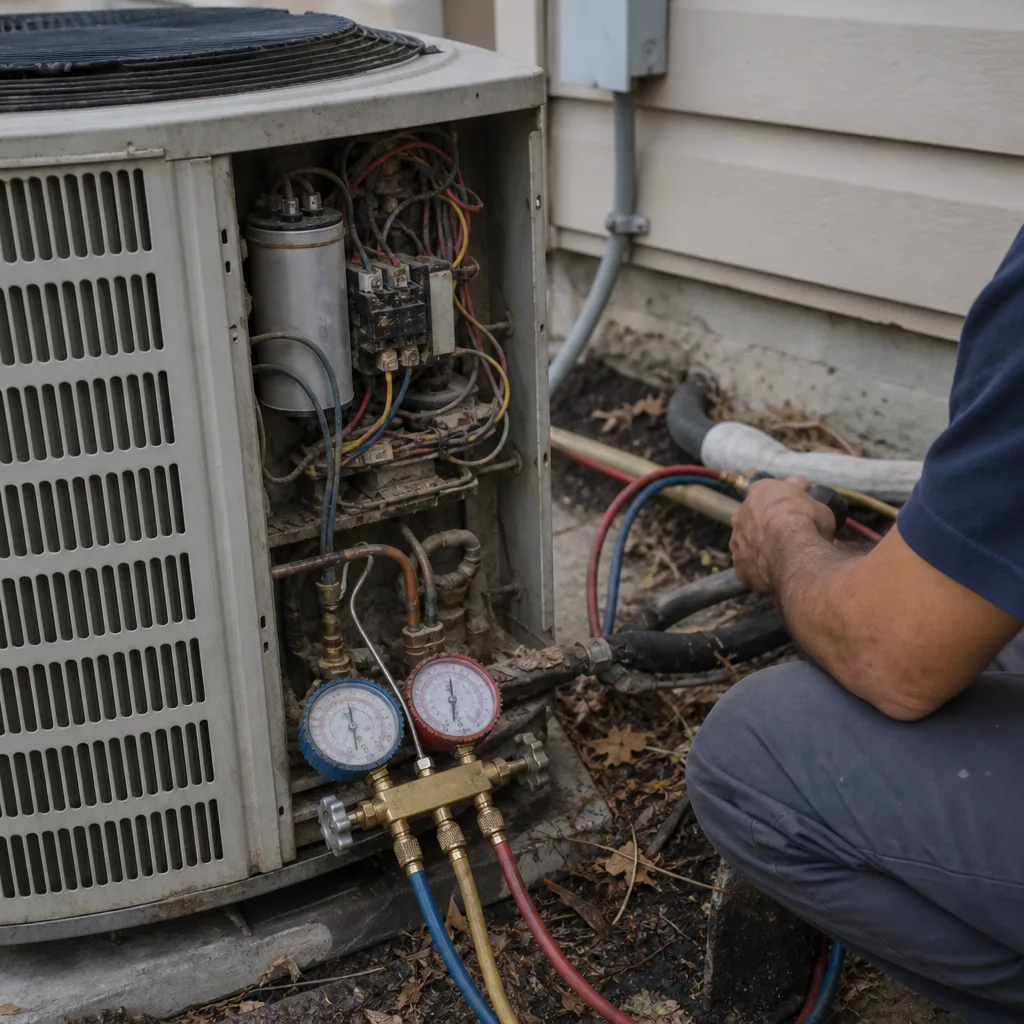 Before
 After
Common Mistakes to Avoid
- Hiring on price alone. A quote that’s dramatically lower than the other two is almost always missing scope: no permit, no coil, no thermostat, no disposal. Find the missing scope before you find the “deal.”
- Skipping the TDLR check. It takes two minutes and it filters out the shops that shouldn’t be contracting with homeowners at all. Every time you skip it, you’re trusting someone else’s due diligence.
- Accepting a verbal diagnosis. A diagnosis without a component, a meter reading, or a test result is a sales pitch. Ask for it in writing on the quote. A real diagnosis will name the failed part.
- Ignoring the refrigerant transition. The R-410A to R-454B shift is ongoing, and quotes that don’t name the refrigerant on a new system install are a sign the contractor isn’t tracking the market. Ask.
- No permit, no inspection. Pearland installs are permitted jobs, and skipping the permit to save a few hundred dollars is a long-term risk on resale. If the contractor proposes to skip it “to save you money,” that’s your signal.
- Not asking about the startup documentation. If you can’t get a startup sheet with pressure and charge readings, you don’t know what you got. This is the homeowner’s single best evidence of a good install.
- Comparing quotes at different SEER2 ratings or different refrigerants as if they’re equal. A 14.3 SEER2 system and a 16 SEER2 system aren’t the same job, even if the totals look close. Align the specs before comparing price.
When to Call a Professional
If your system is down in a Pearland summer, you’re smelling gas near the furnace, or a quote has landed but you can’t tell whether the numbers are right, it’s time for a call. The things we handle most in Pearland are AC repairs on systems that stopped cooling in the middle of a hot stretch, installs that need a real Manual J before the equipment gets picked, and furnace repairs when the first cold snap hits. Our technicians have up to 8 years of experience, we service nine major brands (Carrier, Trane, Lennox, Goodman, Rheem, York, Daikin, Bryant, American Standard), and we work on your brand, not just ours. AC Repair Pearland offers free estimates in Pearland – call (833) 946-7622. We answer 24/7. Fast dispatch from 7am to 7pm, Sunday through Friday.
Frequently Asked Questions
Look up the company’s TACL (Texas Air Conditioning Contractor License) on the TDLR database at tdlr.texas.gov, confirm the status reads “Active,” and check that the class (A or B for residential work) matches what’s being quoted. The name on the license should match the name on your contract, and the contractor should provide a certificate of insurance on request without hesitation. If any part of that is difficult, treat it as a reason to look elsewhere. Call (833) 946-7622 for a free estimate – we’re happy to walk you through the check before you hire anyone.
A quality residential contractor works on the major brands that are actually installed in Pearland homes – not just the one they sell. We service Carrier, Trane, Lennox, Goodman, Rheem, York, Daikin, Bryant, and American Standard, which covers the vast majority of systems in the area. If a shop only works on one or two brands, ask what happens when yours isn’t theirs. Call (833) 946-7622 – free estimates on repairs and replacements alike.
Manual J is the industry-standard method for calculating the correct cooling or heating capacity for a specific home, based on square footage, window area, insulation, orientation, and local climate. Without it, a contractor is guessing at tonnage, and an over- or under-sized system will run inefficiently and shorten its own life. Ask for the Manual J output alongside the quote. Any PEARLAND-area contractor should produce it without delay. Call (833) 946-7622 to have us run the calculation on your replacement estimate.
Line up the SEER2 number, the tonnage, the refrigerant type (R-410A or R-454B), the exact model numbers, and the full scope of work (coil, thermostat, permit, disposal) for each quote before you compare totals. A 14.3 SEER2 system and a 16 SEER2 system are not the same job, even if the prices look close. Align the spec first, then compare price. Call (833) 946-7622 for a written estimate in Pearland that spells out all of the above – estimates are free.
It depends on the failure, the age of the equipment, the parts cost, and how close it is to the end of its expected service life – and an honest contractor will tell you which one makes financial sense before any work begins. As a general rule, a repair that costs a small fraction of replacement on a system with years of productive life left is worth doing; a repair on a compressor that’s already near the end of a system’s usable life usually isn’t. Ask for the diagnosis in writing and ask what the system is actually worth keeping. Call (833) 946-7622 for a straight assessment – repair or replace, we’ll tell you which one actually makes sense.
The contract should name which party pulls the permit, provide the exact model numbers for the equipment being installed, state the refrigerant type and SEER2 rating, and include a written commitment to equipment startup documentation (refrigerant charge, static pressure, airflow) after install. It should also spell out the warranty terms in detail and note that any work beyond the quoted scope requires a signed change order. If any of those are missing, ask before you sign. Call (833) 946-7622 and we’ll send a sample contract structure so you know what to look for – free estimates on every install.
The Bottom Line
Hiring an HVAC contractor in Pearland isn’t about picking the right brand or the right coupon. It’s about filtering out the shops that can only profitably do one thing. Verify the TACL license on the TDLR site, ask what brands they stock parts for, read the quote line by line, demand Manual J and Manual S references on any replacement, and get the permit and startup clauses in writing before install day. Those five moves do more than any review score can. Pearland homeowners who do this once rarely get burned twice. We work on nine brands and we’re brand-neutral about installs, which means the recommendation you get is the one that fits your home and your budget – not the one that fits a sales goal. For repairs, AC installation, or furnace repair under one roof, call (833) 946-7622 for a free estimate. We answer 24/7. Fast dispatch from 7am to 7pm, Sunday through Friday. Honest guidance on whether repair or replacement actually makes sense is the starting point on every call. And if you want to double-check what we’ve covered before you dial, take a look at our AC Repair Pearland service pages, or review our Pearland coverage before you make the call.
Written by the team at AC Repair Pearland.