
Last updated November 15, 2026
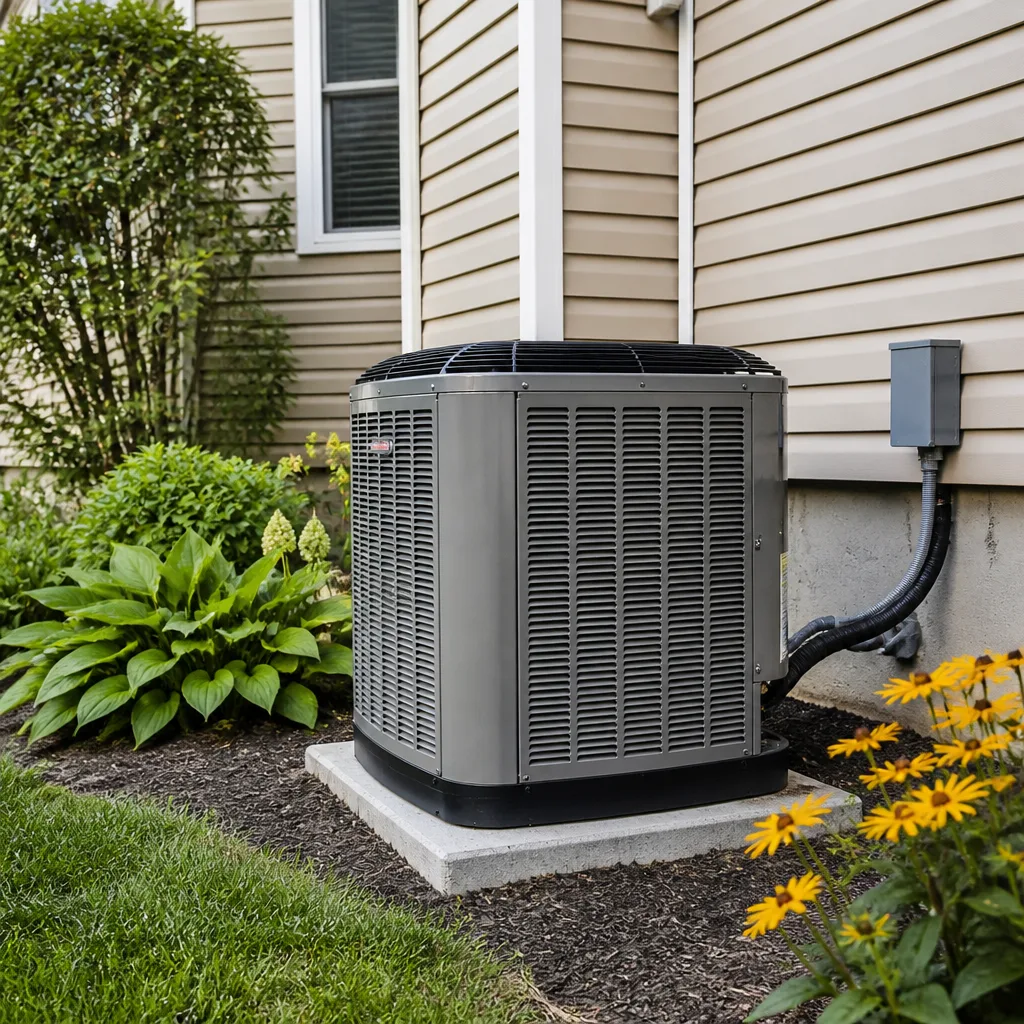 AC repair
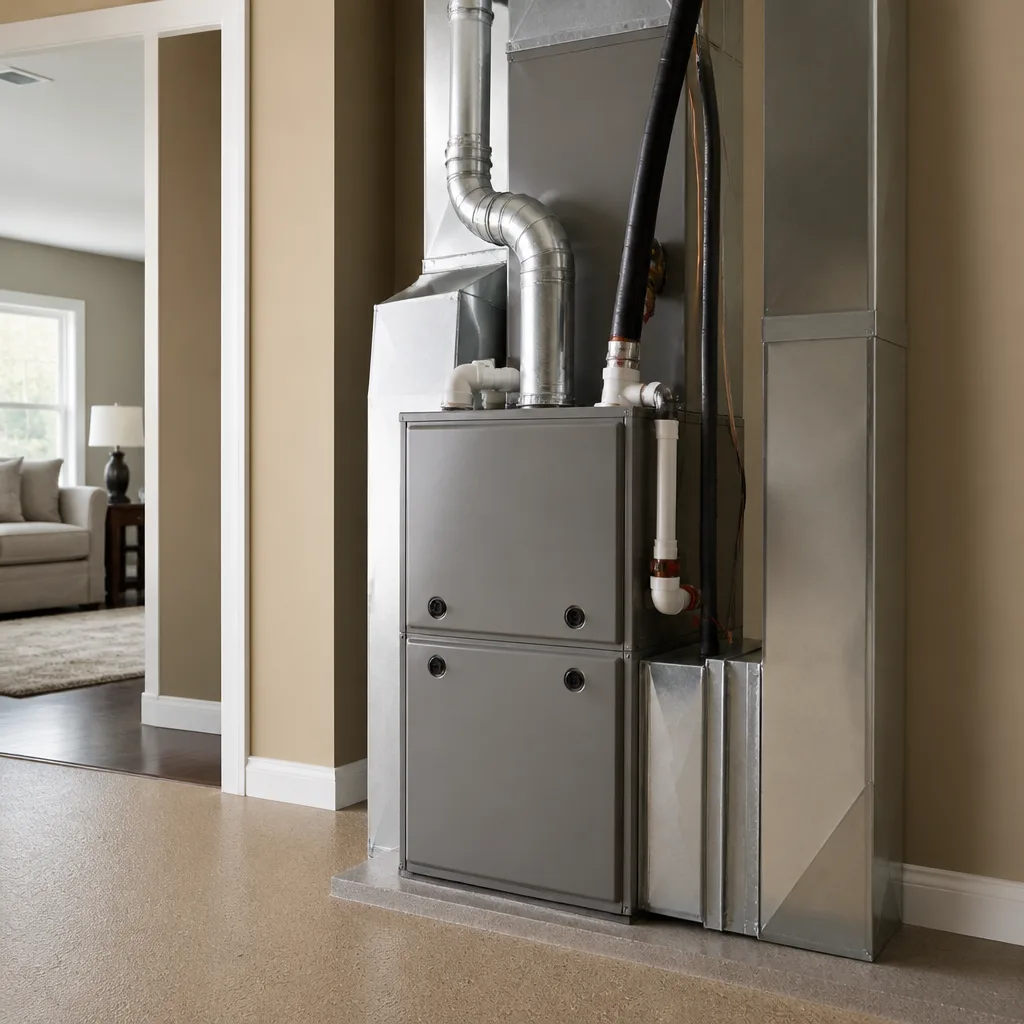 Furnace & heating
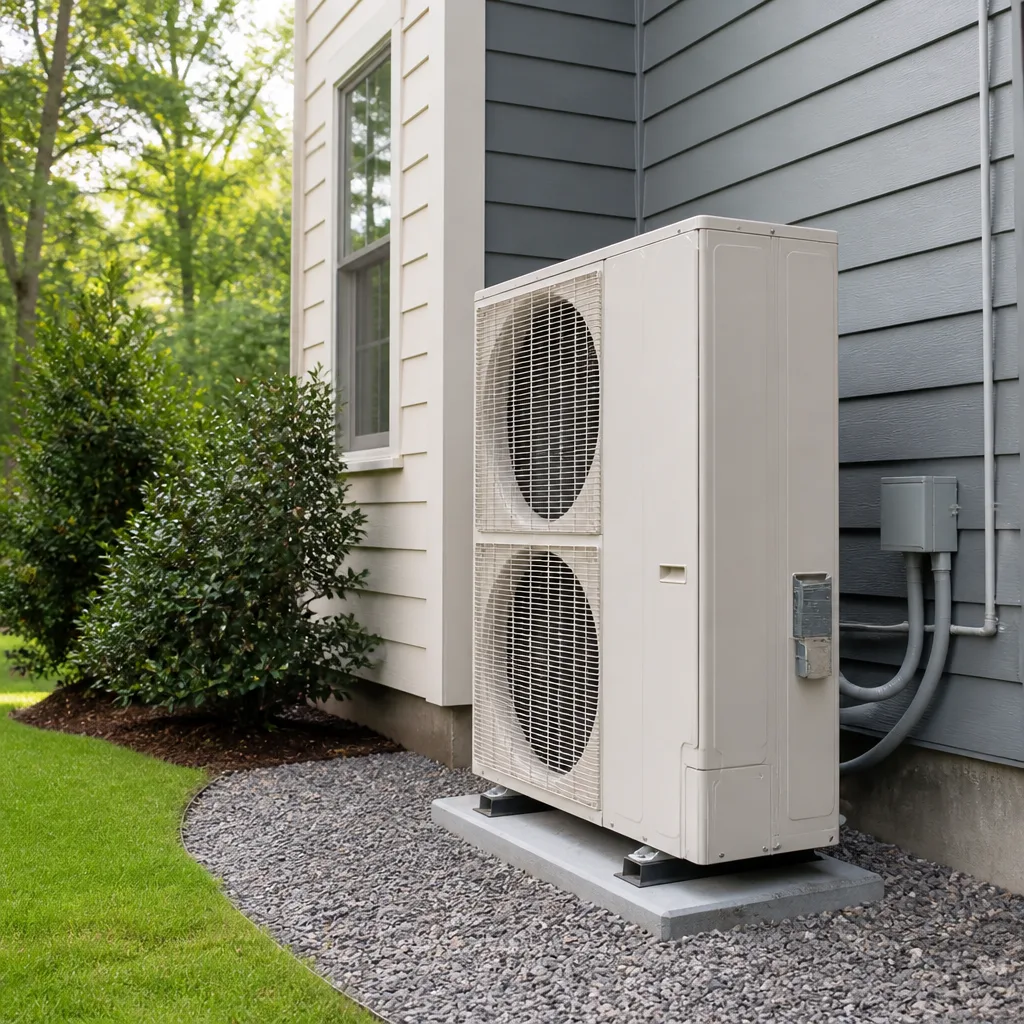 Heat pumps
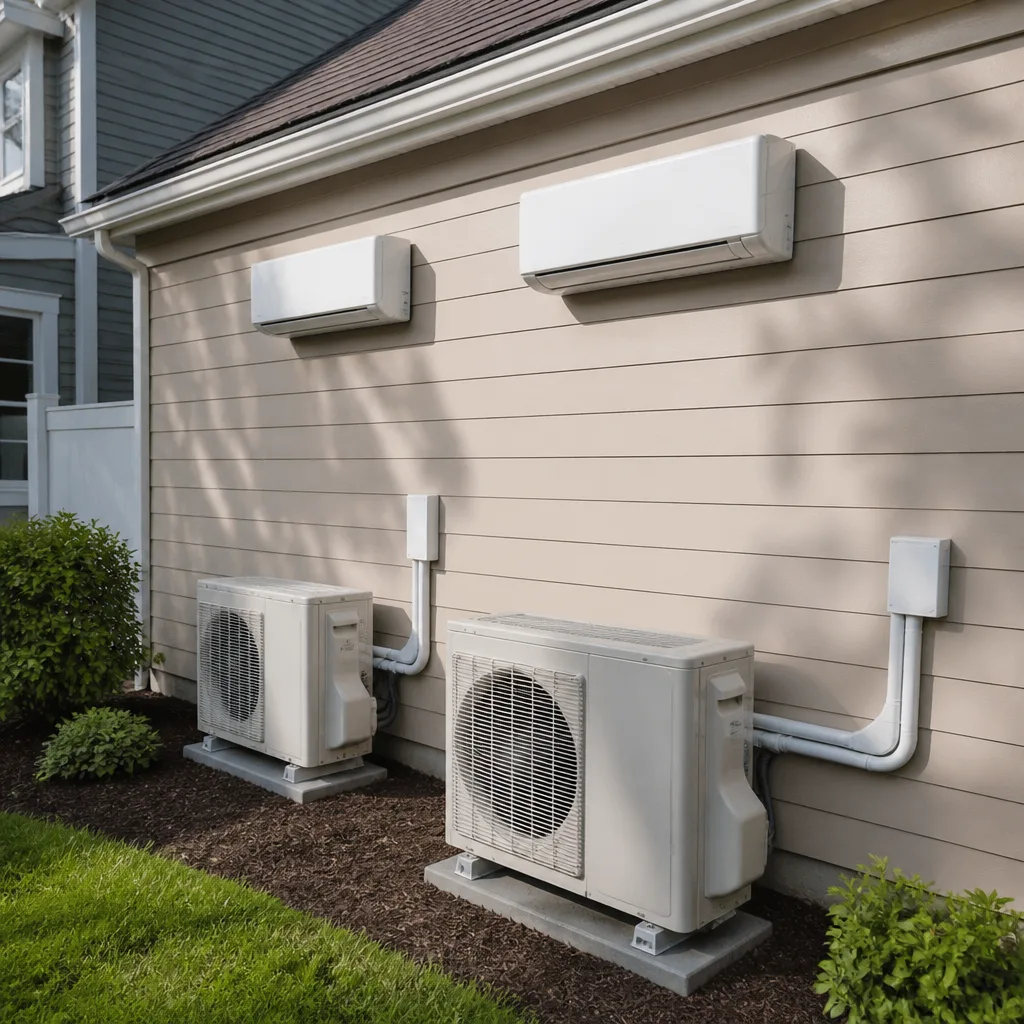 Ductless mini splits
 Carrier
 Trane
 Goodman
Seasonal tune-up and full diagnostic on your Carrier, Trane, or Goodman system - readings shown to you before any repair is proposed
Diagnosis first, numbers second - you approve the repair price before a single part goes in.
Get your free estimateDIY vs Professional HVAC: The Pearland Homeowner’s Decision Guide
Replacing your own capacitor costs about $15 in parts and takes 20 minutes. It’s legal, it’s safe if you discharge it properly, and most technicians will tell you the same thing. Topping off your own refrigerant is a different story: it’s illegal without an EPA 608 certification, it voids most manufacturer warranties, and it masks the leak that will eventually cost you a compressor. That line between the two, the tasks you can legally and safely handle versus the ones that create real liability, is clearer than most guides admit. This guide draws the line task by task, tuned for Pearland’s particular brand of heat and humidity.
Quick Answer
Homeowners can legally handle filters, coil cleaning, condensate drain care, and thermostat swaps in Pearland – these are genuinely high-ROI DIY tasks. Anything involving refrigerant, sealed-system wiring, compressor diagnosis, or equipment replacement requires a licensed technician, both by Texas law and by the warranty terms on every major brand. The gray zone is ductwork and coil-deep cleaning, where bad DIY work causes problems far more expensive than the original service.
Styles & brands we work with
- AC repair
- Furnace & heating
- Heat pumps
- Ductless mini splits
- Carrier
- Trane
- Goodman
Table of Contents
- Where the legal line actually sits in Texas
- The task-by-task breakdown
- The warranty clause that decides most of these cases
- Why DIY duct sealing in Pearland’s humidity goes wrong
- The DIY tasks worth doing well
- When a professional diagnosis beats guessing
- What professional service actually costs
- When to call in a technician
Where the Legal Line Actually Sits in Texas
Texas regulates HVAC work through the Texas Department of Licensing and Regulation, and the dividing line is straightforward: refrigerant handling and sealed-system electrical work require a license. This is one of the clearest rules in home repair law, and it settles a lot of the DIY debate before skill even enters the picture.
What homeowners can legally do without any license:
- Replace air filters. Any homeowner, any filter, no restriction.
- Clean accessible portions of the outdoor condenser coil. Basic rinse and debris clearing, with the power off.
- Flush and maintain the condensate drain line. This is the single most common cause of mid-summer water damage in Pearland homes.
- Swap a thermostat when the new unit is compatible with the existing low-voltage wiring (typically R, C, Y, G, W terminals).
- Replace a contactor or capacitor on the outdoor unit, with the disconnect pulled and the capacitor properly discharged.
- Seal exterior gaps near the air handler with appropriate mastic, not tape.
What requires an EPA 608-certified technician, in Texas and nationally:
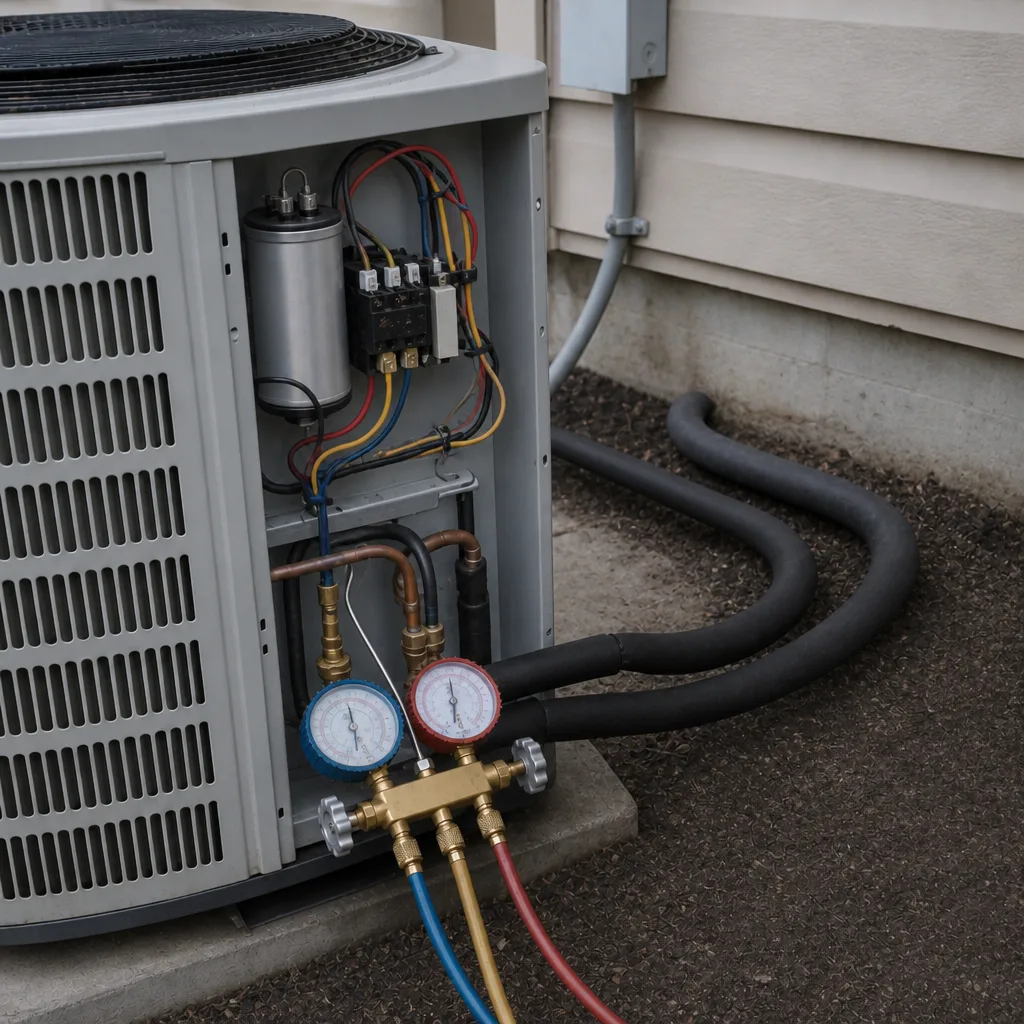
- Adding, recovering, or handling refrigerant in any way
- Opening the sealed refrigerant circuit
- Diagnostic work that touches the compressor or its windings
- Any work on the sealed electrical portions of the system beyond component swap-outs
What requires a licensed HVAC contractor regardless of scope:
- Equipment replacement – condenser, air handler, or full system
- Major ductwork modification
- Any work that affects the system’s UL listing or manufacturer certification
If you’re not sure which bucket your task falls into, the safe answer is the licensed bucket. Pearland homeowners get tripped up most often by the “I’ll just top it off” instinct – a $30 can of refrigerant looks like an easy win, and it’s the single fastest way to create a $2,000 problem.
The Task-by-Task Breakdown
This is the section most guides skip. Here’s a definitive breakdown of common HVAC tasks split by legal status and practical advisability in Pearland’s climate.
| Task | Legal for homeowners | Practical advice |
|---|---|---|
| Air filter replacement | Yes | Do it. Monthly in summer, every 2-3 months the rest of the year. |
| Condensate drain flush | Yes | Do it. Monthly in cooling season. Vinegar or a wet/dry vacuum on the drain line. |
| Outdoor coil rinse | Yes | Do it with power off. Garden hose, no pressure washer. |
| Thermostat swap | Yes | Do it if wired the same. Snap a photo before disconnecting. |
| Capacitor replacement | Yes | Safe if the disconnect is pulled and the capacitor discharged. Cheap part, high payoff. |
| Contactor replacement | Yes | Same cautions as capacitor. Low-voltage wiring must be reinstalled identically. |
| Blower motor replacement | Technically yes | Legal but inadvisable. Tight wiring, sealed connections, easily botched. |
| Duct sealing (accessible joints) | Yes | Legal, but requires the right mastic product. Tape fails fast. |
| Ductwork modification or runs | No | Requires licensed contractor. Load calculation matters. |
| Refrigerant top-off or recovery | No – federal law | Requires EPA 608. Also masks the leak causing the loss. |
| Compressor diagnosis or replacement | No | Requires licensed tech. Sealed system work. |
| System replacement | No | Requires licensed contractor, permits, and load calculation. |
| Coil-deep cleaning (indoor evaporator) | Technically yes | Legal but inadvisable. Coils are fragile and access is tight. |
Print this list, or at least remember the four “No” rows. Those are the ones with real legal or financial consequences. The capacitor row is the one that surprises people – a $15 part that fixes a dozen common failures, and the only thing stopping most homeowners is the fear of the discharge arc. It’s a legitimate fear. Discharge it properly with an insulated screwdriver or you’ll find out why techs treat capacitors like loaded springs.
The Warranty Clause That Decides Most of These Cases
Skill level isn’t what kills most manufacturer warranties. Improper installation and unlicensed refrigerant handling are the two things that actually void coverage on every major brand, from Rheem to York to Daikin to Bryant.
Here’s the warranty language to read for in your manufacturer documentation:
- “Improper installation” – usually defined separately from “defective materials” and “defective workmanship.” Warranty covers the last two; not the first one.
- “Installation not in accordance with manufacturer specifications” – this means the equipment was installed to the letter of the install manual. Line set length, charge weight, airflow, duct sizing – all of it.
- “Refrigerant handling by non-certified personnel” – present in almost every warranty. A single DIY top-off can void the compressor portion of a 10-year warranty.
- “Service performed by non-licensed contractors” – some manufacturers require proof of licensing. Without it, the claim gets denied.
- “Alteration of factory-sealed components” – covers cutting into sealed electrical, refrigerant, or compressor portions of the system.
Here’s the practical translation: your homeowner DIY work on filters, drains, thermostat swaps, and capacitor replacement almost never affects warranty coverage because it doesn’t touch a sealed component. Your DIY work on refrigerant, sealed electrical, or ductwork modification almost always does. That’s not a coincidence – the warranty language tracks the licensing line almost exactly.
If your system is under manufacturer warranty and you’re considering anything beyond the safe list, call us before you touch it. A five-minute conversation preserves thousands of dollars in coverage.
Why DIY Duct Sealing in Pearland’s Humidity Goes Wrong
This is the section most homeowners skim past, and it’s the one that costs the most downstream.
Pearland runs humid for most of the cooling season, and duct systems in this climate do something subtle: they leak in both directions. Supply ducts leaking into the attic waste cold air. Return ducts leaking pull hot humid attic air into the system. When the return side is leaking, the system is pulling in moisture along with the heat, and that moisture heads straight toward your evaporator coil.
That’s where the wrong product becomes expensive. Standard foil duct tape – the shiny stuff – fails within a season or two in Pearland’s heat. The adhesive softens, the tape lifts, and you’re back to square one. Worse, mastic applied over a dirty surface or over the wrong tape still fails. The proper product for accessible duct joints is UL 181-rated mastic, applied to a cleaned surface, with mesh tape embedded in the mastic at wide joints. Anything less is temporary.
Here’s what can go wrong with a duct sealing job that ignores the material requirement:
- Attic air pulled into the return stream drives indoor humidity up, sometimes by 10% or more in a Pearland summer
- Higher indoor humidity stresses the evaporator coil, accelerates corrosion, and encourages biological growth on the coil face
- Leaks around the air handler and plenum gaps can pull in unfiltered attic air, bypassing the filter entirely
- The system runs longer to reach setpoint, which raises energy bills and shortens equipment life
If your ducts are accessible and you want to seal them yourself, buy UL 181 mastic specifically. Skip the tape. Wear gloves and a mask. Clean the joint surfaces with a damp rag and let them dry before applying. And if the joints are buried behind drywall or the air handler connections aren’t obvious, this is a job for a professional – the wrong seal on the wrong joint is worse than no seal at all. For a system that’s already leaking badly enough to show humidity symptoms, we recommend booking an AC repair diagnosis rather than a weekend DIY project.
The DIY Tasks Worth Doing Well
Not everything in HVAC is a case for calling a professional. Three tasks are genuinely worth doing yourself, and doing them consistently is the highest-return maintenance work on the whole system.
1. Filter replacement – on a real schedule
In Pearland’s cooling season, a 1-inch filter saturates in about 30 days. Not 90. A dirty filter reduces airflow, forces the blower to work harder, and in a humid climate can lead to coil icing. Buy standard MERV 8 filters (MERV 11 and up can actually restrict airflow in older systems with undersized returns – check your filter grille size before jumping grades). Replace on the first of each month through the cooling season and every 2-3 months otherwise.
2. Condensate drain maintenance
This is the single most overlooked DIY task and the highest water-damage risk in Pearland homes. The condensate drain carries gallons of water per day during cooling season, and it clogs easily with biological growth. Pour a cup of white vinegar down the drain line every month during cooling season – the vinegar kills the growth before it builds up. If you have a hookup for it, run a wet/dry vacuum on the exterior drain stub for 30 seconds to pull any debris through. If you have a float switch on the drain pan, test it once a year by lifting the float manually – the system should shut off. If it doesn’t, that’s a professional call.
3. Outdoor condenser cleaning
Pearland’s pollen and debris load builds up fast on the condenser fins. With the thermostat off and the disconnect pulled, rinse the coil fins from the inside out with a garden hose on low pressure. Never use a pressure washer – it flattens the fins permanently. Clean the area around the unit of leaves and grass clippings. This one is simple, and the payoff shows up on your electric bill.
Beyond these three, the return on DIY drops off fast. If your system is struggling between these routine tasks, our AC repair Pearland team diagnoses the actual cause rather than selling you another filter.
When a Professional Diagnosis Beats Guessing
There are specific HVAC symptoms where DIY guessing costs more than the service call, and they cluster around a handful of failure modes that look like one thing and are actually another.
Call a professional immediately for any of these:
- System runs but doesn’t cool. Three possible causes: low refrigerant charge (leak), failed compressor, or airflow restriction. Each has a different fix and different cost. Guessing means buying parts that don’t solve the problem.
- System short-cycles repeatedly. Could be a failing capacitor, a sticking contactor, an oversized system, or a refrigerant pressure fault. A capacitor swap fixes maybe one in four shorts. The other three require diagnosis.
- Ice on the indoor coil or refrigerant lines. Ice almost always means either a refrigerant leak or an airflow problem – not a “wait for it to thaw” situation. Continuing to run the system with ice on the coil risks compressor damage.
- Burning smell or tripped breaker. Never DIY territory. Sealed electrical work, potential fire risk. Call a technician and shut the system off.
- System runs constantly but reaches setpoint. Usually a duct problem, not an equipment problem. Duct diagnostics need airflow measurement.
- New noises – banging, screeching, grinding. Each points to a specific failure. A screech usually means a bearing; a bang means something is loose inside the sealed portion of the system.
The pattern here is that most HVAC failures look identical from the thermostat. “The house is hot” is a symptom, not a diagnosis. When two possible causes point to two different repair scopes, a professional diagnostic is cheaper than buying parts to test a hypothesis.
What Professional Service Actually Costs
We can’t quote a firm price without seeing the system, but we can tell you the general shape of what professional HVAC service costs in the Pearland market. The written estimate is what sets the final number, and estimates are free.
- Diagnostic visit: bundled into the service call – the estimate you receive is your cost quote
- Capacitor replacement (professional): typical range $150-$300 depending on part and access
- Contactor replacement (professional): typical range $180-$350
- Blower motor replacement: typical range $450-$900 depending on motor type
- Refrigerant leak diagnosis and repair: varies widely with leak location and access
- Compressor replacement: major repair, typically priced as a partial system rebuild
- Full system replacement: quoted per home based on load calculation, equipment selection, and duct condition
Any HVAC company that quotes a firm number over the phone without seeing the system is guessing, and the guess usually goes up once they’re on site. Insist on a written estimate before any work begins. For a system that needs a full replacement, see the AC installation process – we recommend equipment based on your home’s actual requirements, not on which brand we’d rather sell you.
Because we work on Carrier, Trane, Lennox, Goodman, Rheem, York, Daikin, Bryant, and American Standard, our technicians diagnose your system rather than steering you toward a brand we prefer. Brand-neutral advice on replacement is worth more than you might think when a compressor failure forces the decision.
When to Call a Professional
Call a technician whenever the task involves refrigerant, sealed electrical components beyond a capacitor or contactor swap, compressor diagnosis, ductwork modification, or equipment replacement. Call immediately – not after another weekend of guessing – when the system runs but doesn’t cool, when ice forms on the coil or lines, when you smell burning, when the breaker trips repeatedly, or when the system short-cycles. These are the scenarios where the diagnostic call costs less than the parts you’d buy chasing the wrong cause. Our technicians have up to 8 years of experience and cover the full comfort system – AC repair, AC installation, and furnace repair – so a single call handles heating and cooling together. AC Repair Pearland offers free estimates in Pearland – call (833) 946-7622. We answer 24/7. Fast dispatch from 7am to 7pm, Sunday through Friday.
See the difference
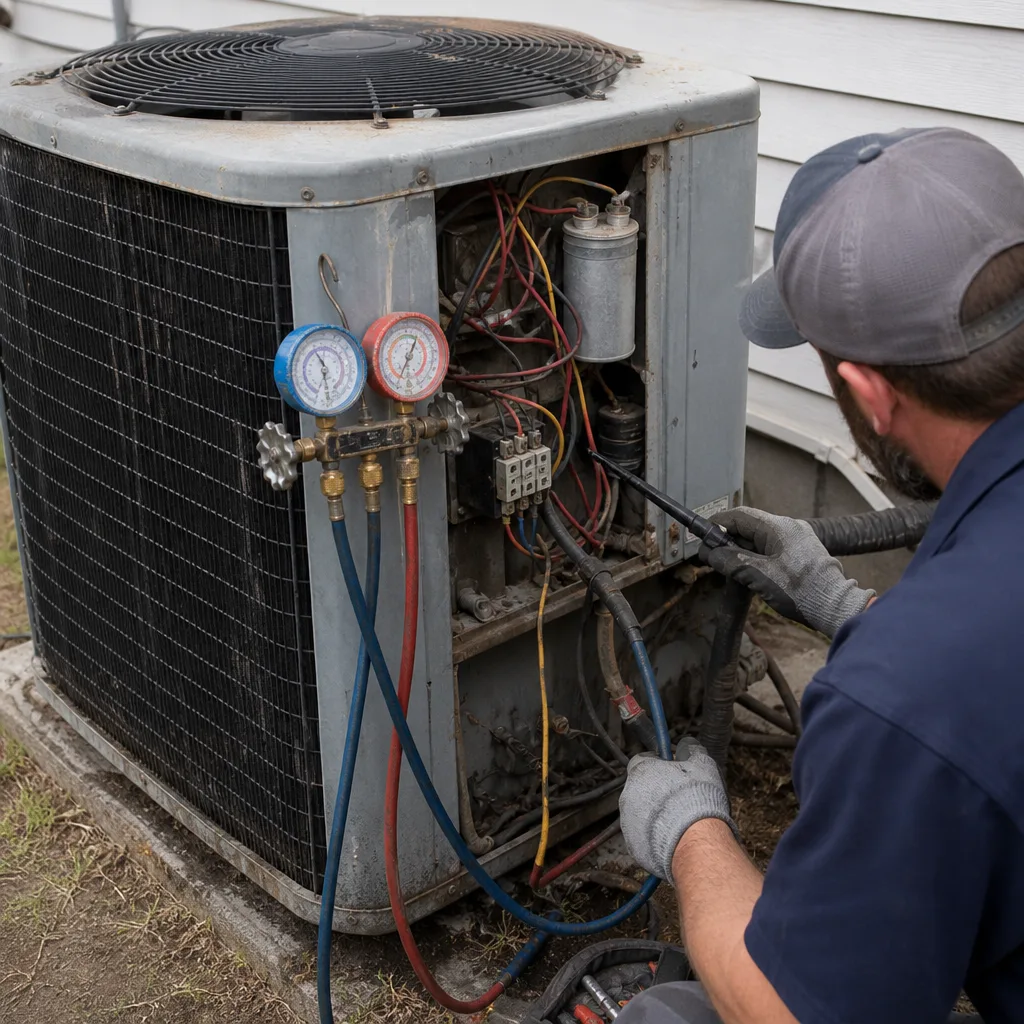 Before
 After
 Before
 After
 Before
 After
Common Mistakes to Avoid
- Buying refrigerant online and adding it yourself. Federal law requires EPA 608 certification for anyone handling refrigerant. Doing it yourself is illegal, voids the compressor warranty, and hides the leak that caused the loss in the first place.
- Using foil duct tape in place of UL 181 mastic. Foil tape fails within a couple of Pearland summers. The adhesive softens, the tape lifts, and the leak comes right back. Use mastic or don’t seal at all.
- Skipping the monthly filter change in cooling season. A 1-inch filter in Pearland’s summer is saturated in about 30 days. Skipping two months builds up enough restriction to stress the blower and encourage coil icing.
- Running the system with ice on the indoor coil. Ice means a refrigerant or airflow fault. Continuing to run the system damages the compressor. Shut it off and call for diagnosis.
- Replacing parts to “test” a theory. Buying a capacitor, then a contactor, then a thermostat to see what fixes the problem usually costs more than a diagnostic visit. The visible symptom rarely points to the actual cause.
- Ignoring the condensate drain until it overflows. A clogged drain line in a Pearland summer can dump gallons into a ceiling or a closet. A monthly vinegar flush costs pennies and prevents the whole problem.
- Accepting a verbal quote on a replacement. Replacement quotes should be in writing, itemized, and based on a load calculation – not on square footage alone. If a contractor won’t put it in writing, that’s the answer.
Frequently Asked Questions
No. Federal law under Section 608 of the Clean Air Act requires EPA 608 certification for anyone handling refrigerant, including homeowners working on their own equipment. Beyond the legal issue, adding refrigerant without finding the leak masks the underlying problem – the leak continues, refrigerant keeps escaping, and the compressor eventually pays the price. Call (833) 946-7622 for a leak diagnosis – estimates are free.
Not all of them, but the important ones. Homeowner work on filters, drain lines, thermostat swaps, and capacitor replacement almost never voids coverage because it doesn’t touch a sealed component. Work on the refrigerant circuit, sealed electrical, or ductwork modification typically does – every major warranty we’ve seen (Rheem, York, Daikin, Bryant included) defines improper installation and non-certified refrigerant handling as exclusions.
A clean filter rules out the airflow cause but not the refrigerant cause. Ice on the coil or the large refrigerant line usually means a low charge from a leak, or a blower problem the filter change didn’t touch. Continuing to run the system with ice on the coil risks compressor damage. Call for diagnosis rather than waiting for it to thaw – (833) 946-7622, and we’ll get a technician out.
Standard foil duct tape fails fast in Pearland’s humidity – the adhesive softens and the tape lifts within a season or two. UL 181-rated mastic applied to a cleaned joint is the material that holds. And the leak itself is the bigger problem: leaking return ductwork pulls hot humid attic air into the system and drives up indoor humidity, which the coil then has to work harder to remove.
Any time a quote recommends full system replacement without documenting the failed component, or quotes a repair that costs more than half of a new system. A second diagnostic on a major repair is usually cheaper than the wrong fix. We present repair and replacement options transparently because those decisions belong to the homeowner, not the contractor.
Filters monthly during cooling season and every 2-3 months otherwise. Condensate drain flushed monthly in cooling season. Outdoor coil rinsed at the start of cooling season and any time you see visible debris. Thermostat batteries annually. Everything else is a professional call – our team covers Pearland service with free estimates and can walk you through what’s worth DIY and what isn’t.
The Bottom Line
The DIY vs professional HVAC decision isn’t really about skill level. It’s about legal exposure (refrigerant and sealed electrical require certification), warranty preservation (improper installation voids coverage on every major brand), and consistency (some DIY tasks, done right, prevent the expensive failures). Handle filters, drain lines, outdoor coil rinsing, thermostat swaps, and capacitor replacement yourself. Call for anything involving refrigerant, the sealed refrigerant circuit, compressor diagnosis, ductwork modification, or equipment replacement. If you’re in the gray zone, be honest with yourself – the wrong duct seal or the wrong parts-swap can cost more than the professional call you avoided. Whenever the question is “repair or replace,” we’ll give you a straight answer based on the actual condition of your system, not on which brand we prefer to sell.
If you’re in Pearland and your system is doing something you don’t recognize, call AC Repair Pearland at (833) 946-7622 for a free estimate. We answer 24/7. Fast dispatch from 7am to 7pm, Sunday through Friday.
Written by the team at AC Repair Pearland.