
Last updated November 15, 2026
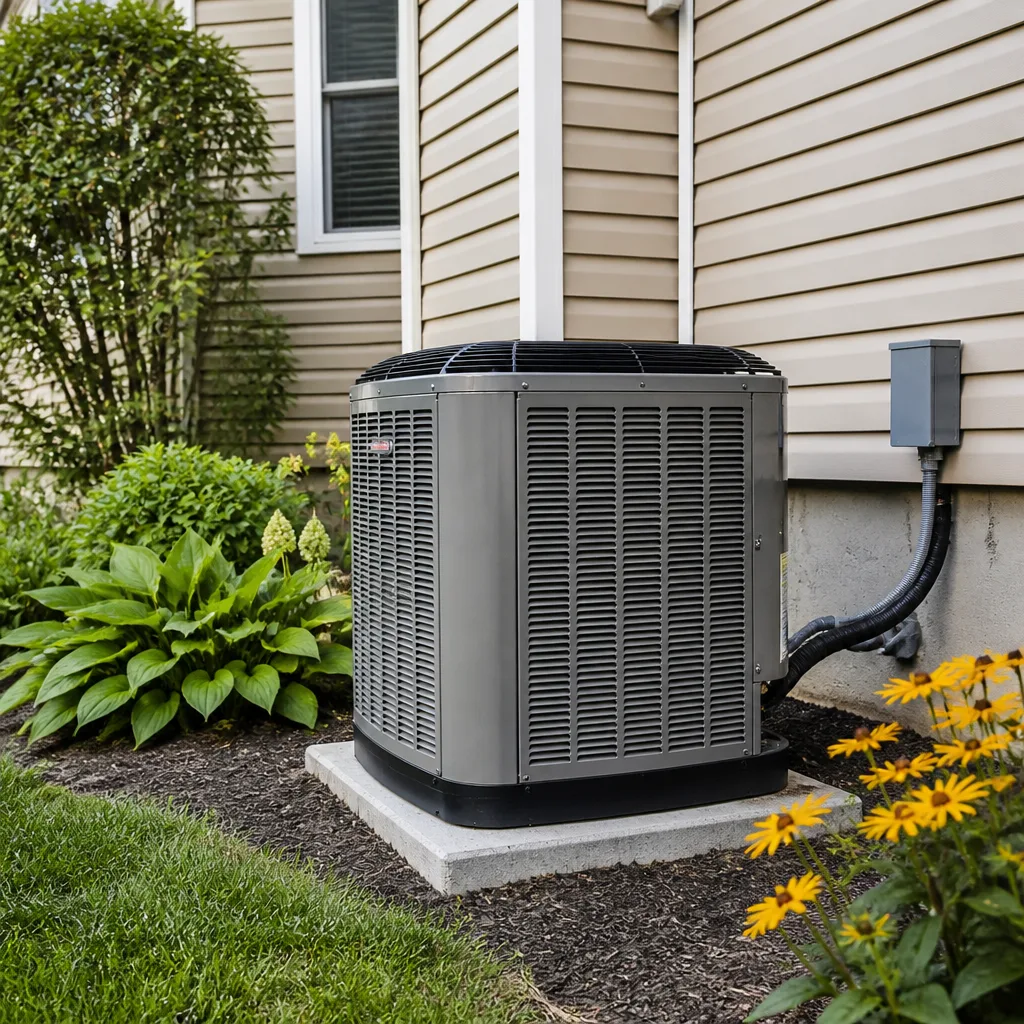 AC repair
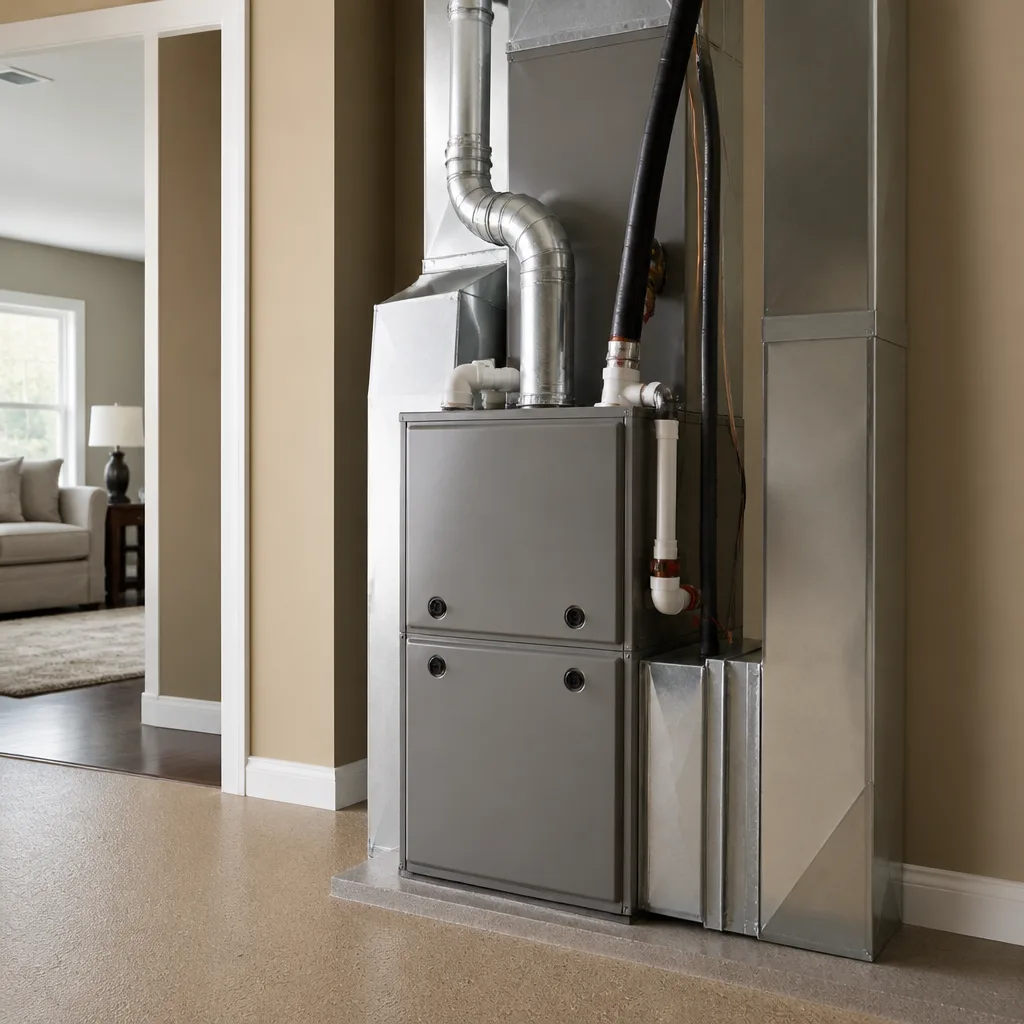 Furnace & heating
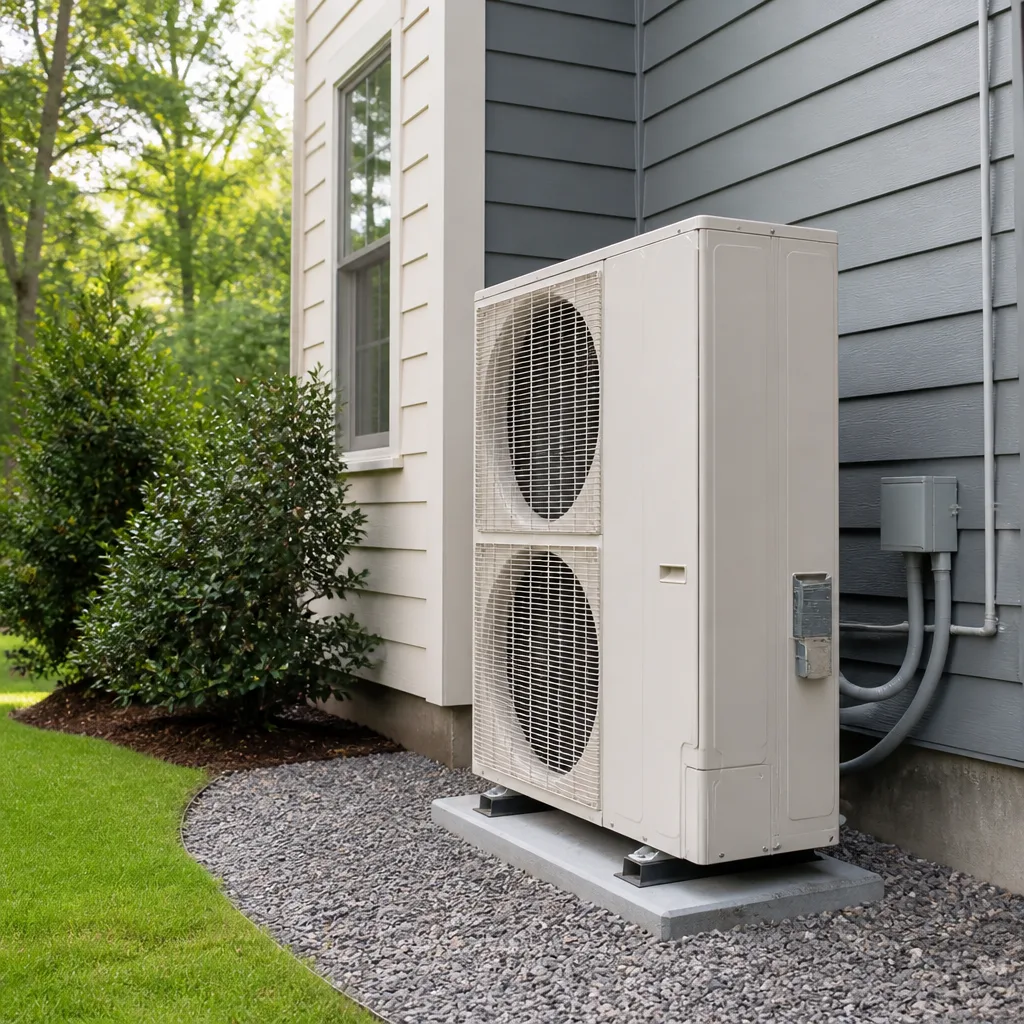 Heat pumps
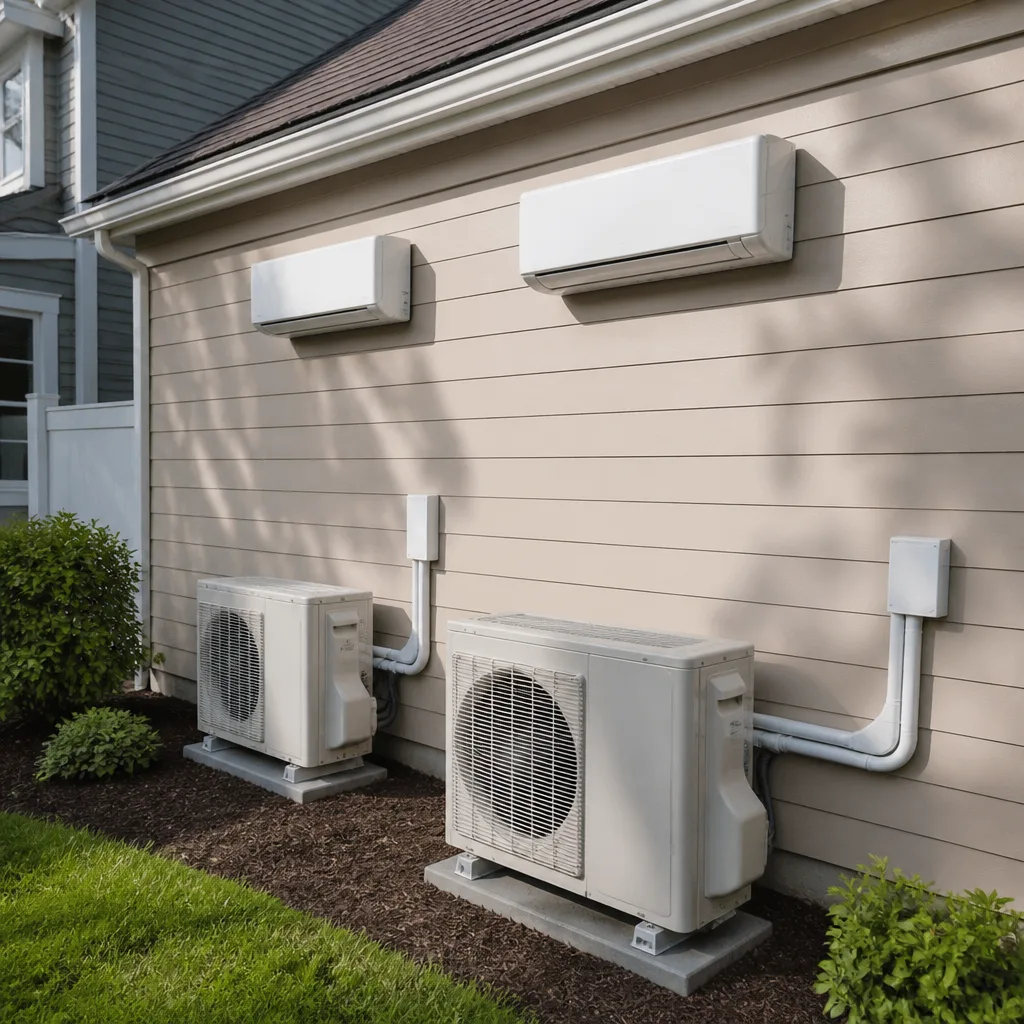 Ductless mini splits
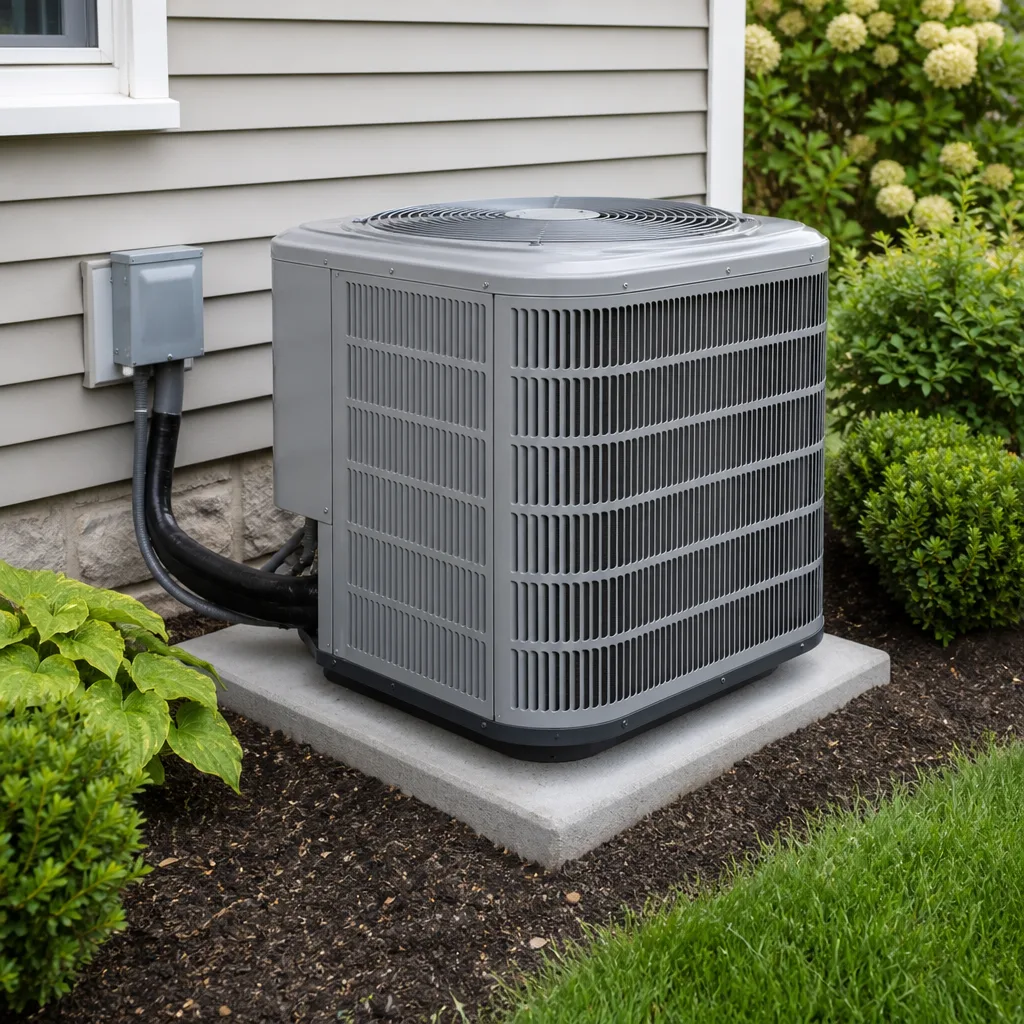 Carrier
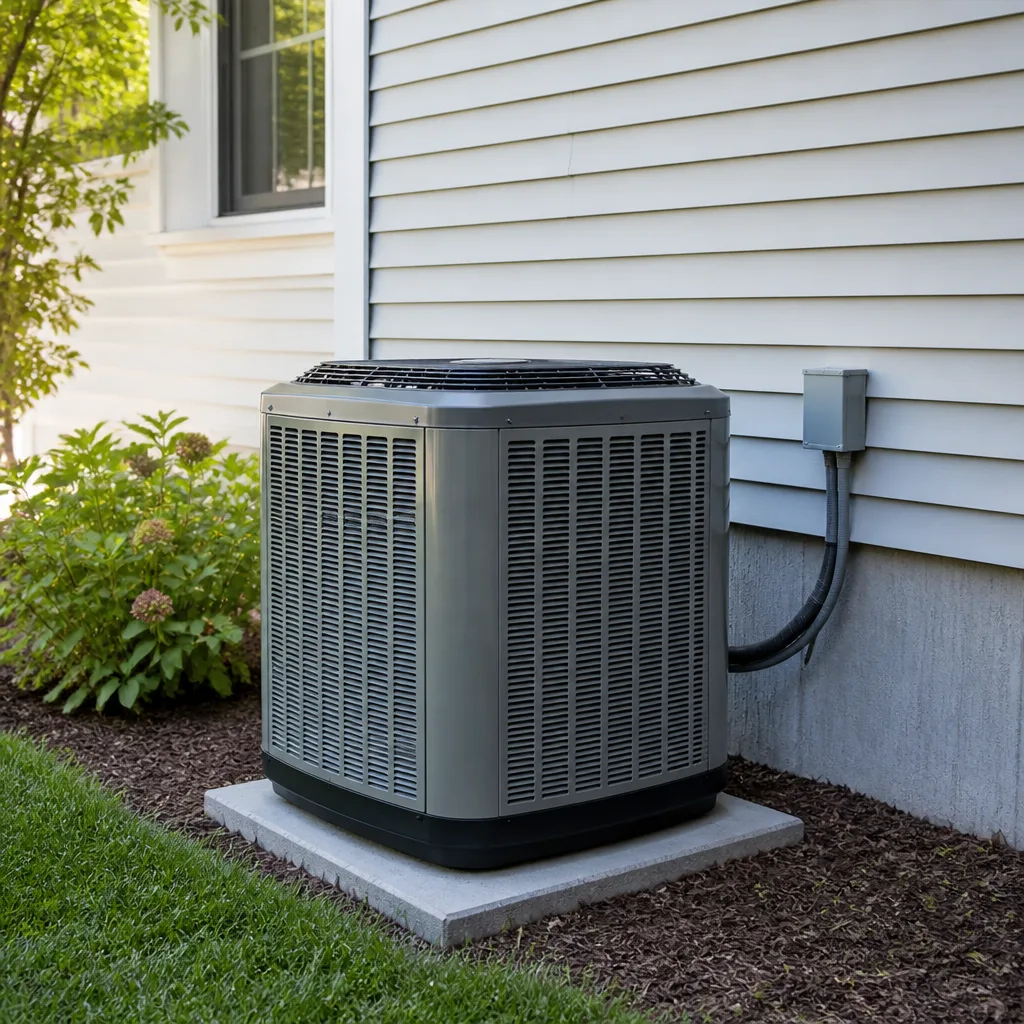 Trane
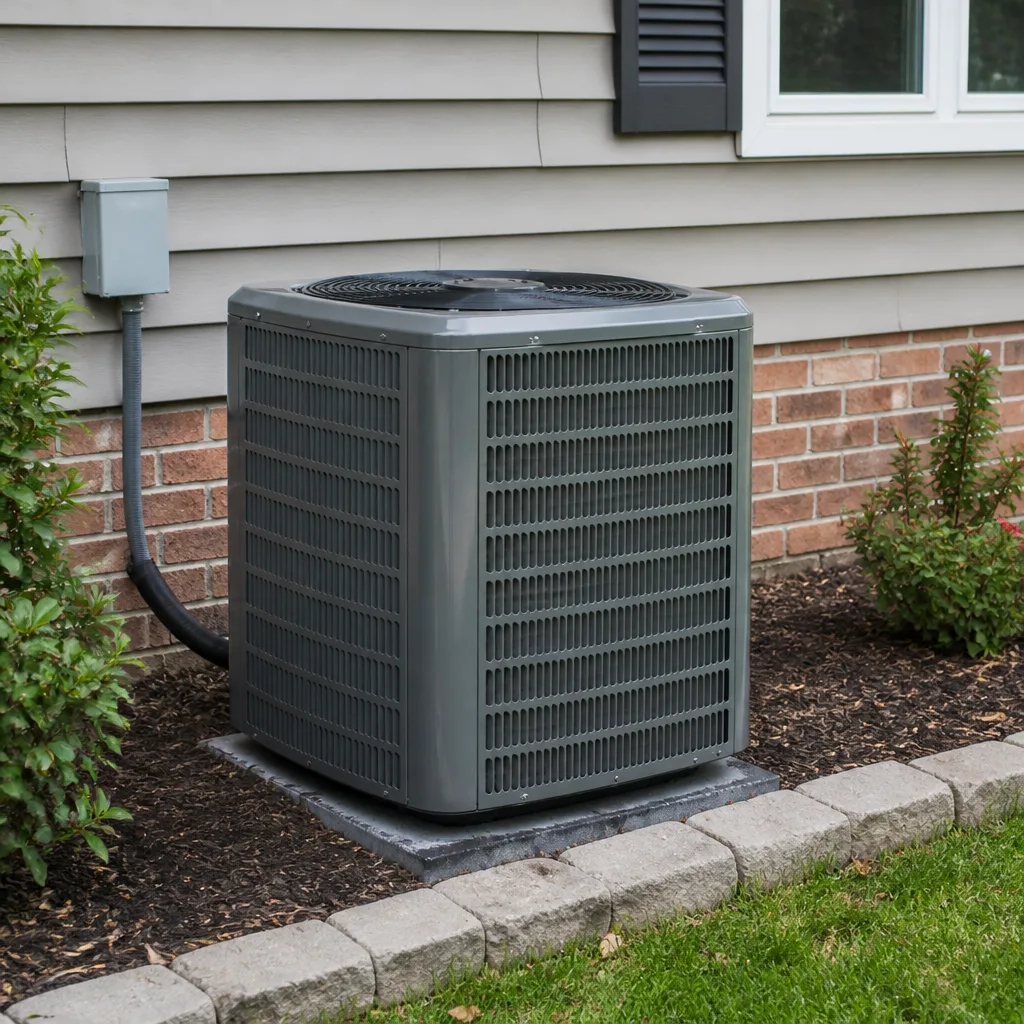 Goodman
Seasonal tune-up and full diagnostic on your Carrier, Trane, or Goodman system - readings shown to you before any repair is proposed
Diagnosis first, numbers second - you approve the repair price before a single part goes in.
Get your free estimateThe Complete AC Repair Guide for Pearland Homeowners
Most AC repair advice you’ll read online was written for a national audience, and it misses the thing that actually drives a lot of failures in Pearland: the ground under your condenser. This city sits on expansive clay soil that swells when it’s wet and shrinks when it dries, and that slow movement racks condenser pads, vibrates refrigerant lines loose, and knocks drain pans out of alignment. The result looks electrical from the outside – a unit that hums, trips a breaker, or quits cooling – but the real cause is geological. Pair that with humidity that sits above 90% through much of the summer and you get failure patterns that generic guides never mention. This guide walks through what breaks in Pearland, how to tell repair from replace, what to check in the first 20 minutes of a failure, and how to read your own invoice.
Quick Answer
AC repair in Pearland usually comes down to a handful of causes – a tripped breaker or float switch, a fouled condenser coil, low refrigerant from a leak, or a capacitor that’s failed under heat load – and most of these can be diagnosed in a single visit. The right call depends less on the symptom and more on your system’s age, refrigerant type, and the cost of the repair compared to a replacement. A free estimate tells you which path makes financial sense before any work begins.
Styles & brands we work with
- AC repair
- Furnace & heating
- Heat pumps
- Ductless mini splits
- Carrier
- Trane
- Goodman
Table of Contents
- Why AC Systems Fail Differently in Pearland
- The First 20 Minutes of an AC Failure
- Repair or Replace? A Pearland Decision Tree
- Component Lifespans by System Age
- How to Read Your AC Repair Invoice
- What Brand-Agnostic Service Actually Means
- Common Mistakes to Avoid
- When to Call a Professional
- Frequently Asked Questions
Why AC Systems Fail Differently in Pearland
The soil in Pearland is the quiet culprit behind a surprising share of AC problems. Expansive clay expands when it absorbs water and contracts as it dries. Your condenser sits on a concrete pad, and that pad is subject to the same ground movement as your driveway or slab. Over a few seasons, a pad can tilt enough to put stress on the refrigerant lines running into the unit, loosen the vibration isolators, or shift the cabinet so the drain pan no longer sits level. The unit runs, but the pan overflows, or the lineset vibrates and eventually wears through a fitting. Homeowners often assume they’re looking at a compressor problem when the bill finally comes due.
Layer in the humidity. Pearland’s summers routinely push past 90% relative humidity, which means your system isn’t just moving heat – it’s pulling a huge amount of moisture out of the air. That condensate has to go somewhere. A drain line that would handle a drier climate without trouble can clog faster here because of the sheer volume of water moving through it, and a pan that’s slightly out of level from soil movement will overflow well before a properly leveled pan would.
Corrosion timelines are also shorter than national averages. Coils that see constant wet-dry cycling accumulate surface corrosion faster than the same coils in a dry climate. That doesn’t mean every unit fails early, but it does mean a 12-year-old system in Pearland may be further along in its corrosion curve than the same unit in Arizona.
None of this is meant to alarm you. It’s meant to explain why a technician who works in Pearland regularly will check things a national guide never mentions: pad level, drain pan pitch, lineset vibration, and the visible corrosion state of the coil. If you’re booking a AC repair, ask whether the technician checks those items specifically.
The First 20 Minutes of an AC Failure
Before you pick up the phone, there are a few checks that are safe to do yourself and that occasionally save you a service call entirely. These are not repairs – they’re diagnostics.
- Check the thermostat. Confirm it’s set to cool, the fan is set to auto, and the temperature is at least a few degrees below the current room temperature. A thermostat set to heat, or set to a temperature the room already meets, will leave the system idle and can look like a failure.
- Check the breaker. Find the breaker feeding the condenser and the one feeding the air handler. If either has tripped, reset it once. If it trips again immediately, stop and call a technician – a repeated trip is a real fault, not a nuisance.
- Check the float switch. Many systems have a float switch in the drain pan that cuts power to the unit if the pan fills with water. If the pan is holding water, the switch has done its job. Empty the pan if you can do so safely and see whether the system restarts – if it does, the underlying cause is a clogged drain line.
- Check the air filter. A filter caked with dust restricts airflow and can cause the coil to freeze. Pull it, look through it against the light, and replace it if you can’t see through it. This alone fixes a surprising number of “weak cooling” complaints.
- Check the outdoor unit. Look for visible debris – leaves, grass clippings, or a tarp – blocking the coil. Clear anything within a few feet. If you see ice on the refrigerant lines or the coil, turn the system off at the thermostat and call a technician.
What you should not do: open the electrical panel, remove panels on the outdoor unit, or attempt to add refrigerant or troubleshoot the compressor. Refrigerant is handled under specific licensing rules, and the electrical components in a condenser can hold a dangerous charge even after the breaker is off. A trained technician diagnoses and repairs those, which is a safety line we don’t recommend crossing.
If those checks don’t bring the system back, it’s time for a professional assessment. We answer 24/7, and fast dispatch from 7am to 7pm gets a technician out to diagnose the actual fault rather than guess at it.
Repair or Replace? A Pearland Decision Tree
This is the conversation most homeowners dread, because in many shops it’s steered by what someone wants to sell you rather than what your system actually needs. We’ll tell you which one makes sense, and here’s the logic we use.
Step 1: How old is the system?
- Under 8 years: Repair is almost always the right call unless the failure is catastrophic – a cracked heat exchanger on the heating side, a dead compressor, or a leaking coil that requires the whole coil to be replaced. Even then, weigh the repair cost against the remaining life of the system.
- 8 to 12 years: This is the gray zone. A single moderate repair is usually worth doing. A second major repair within a couple of seasons is a signal to start planning a replacement.
- 12 to 15 years: Start the replacement conversation. A major repair at this age will often cost half of what a new system would, and you’ll still be facing a replacement in a few years.
- 15+ years: Replacement is usually the better financial path. The system’s efficiency has degraded, refrigerant is often older type, and parts availability gets spotty.
Step 2: What refrigerant does it use?
Older systems using R-22 (also called Freon) face a specific challenge – the refrigerant has been phased out and is expensive to source, so any repair involving a refrigerant charge costs more than the same repair on a modern system. If your system uses R-22 and the repair involves the sealed system, replacement starts to look much better.
Step 3: What percentage of replacement cost is the repair?
A common rule of thumb: if a repair costs more than half the price of a comparable new system, and the system is over about 10 years old, replacement makes more financial sense. That’s not a universal law, but it holds up across most of the cases we see. A system at 60% of replacement cost with 5 years of life left isn’t a bargain.
Step 4: Do the utility math
This is where Pearland-specific math helps. A modern high-efficiency system uses meaningfully less electricity than a 15-year-old unit at the same cooling output. If your unit runs hard through Pearland’s long cooling season – which typically stretches from late spring into fall – the annual electricity difference between an old and a new system is real money. Multiply that yearly savings by the years you expect to stay in the home and compare it to the up-front premium of a higher-efficiency unit. Sometimes the high-efficiency system pays for itself. Sometimes it doesn’t. The written estimate should make that comparison visible.
If you’re leaning toward replacement, AC installation done properly includes a load calculation for your home, not a guess at the square footage. We recommend the right equipment for the home’s needs and budget, and we’re not tied to a single manufacturer to get there.
Component Lifespans by System Age
Across all major brands, certain components fail first, and knowing what to expect at each stage helps you budget and avoid surprise service calls. Our technicians have up to 8 years of experience working across Carrier, Trane, Lennox, Goodman, Rheem, York, Daikin, Bryant, and American Standard systems, and these patterns show up regardless of the badge on the cabinet.
5 to 7 years old
- Run capacitor: The most common failure. Capacitors degrade under heat load, and Pearland’s long cooling season accelerates that. Usually a small, straightforward repair.
- Contactor: The relay that switches power to the compressor. Pitted contacts cause intermittent startups.
- Drain line clog: Very common here due to humidity and condensate volume. A float switch that trips is often the first sign.
- Air filter and blower wheel: Neglected filters foul the blower wheel, which reduces airflow without an obvious symptom other than weak cooling.
8 to 12 years old
- Blower motor: Bearings wear and the motor draws more current before it fails outright. A motor that sounds louder than it used to is worth inspecting.
- Condenser fan motor: Similar wear pattern as the blower motor.
- Ignitor (heating side): On a furnace, the ignitor is often the first thing to fail at this age. That falls under furnace repair, handled by the same team.
- Coil corrosion: In Pearland’s humidity, condensate exposure accelerates coil corrosion. Visible fin damage is a warning sign worth monitoring.
15+ years old
- Compressor: The single most expensive component. When it fails at this age, replacement is usually the better path.
- Refrigerant leaks in the sealed system: The copper lines and fittings have been through enough thermal cycling to develop weeping joints.
- Evaporator coil: Corrosion or a leak here typically means replacement rather than repair at this age.
- Circuit board: Control boards can fail and are increasingly hard to source for older models.
The pattern to notice: failures in the first decade are usually cheap components that can be replaced in a single visit. Failures in the third decade are usually the expensive sealed-system components where replacement starts to make more sense. If you’re on a Rheem, York, Daikin, or Bryant system, the component patterns hold – the brand doesn’t change which parts fail first.
How to Read Your AC Repair Invoice
An honest invoice tells you what was wrong, what was done, and what it cost. A confusing one is worth stopping to read before you sign. Here’s what legitimate line items look like and where padding commonly creeps in.
Legitimate line items
- Diagnostic fee or service call fee: Legitimate if stated up front. We don’t charge one – estimates are free, and the price is set per job by the written estimate.
- Parts (itemized): Capacitor, contactor, motor, valve, switch. Each should list the specific part and its cost.
- Labor (itemized): The charge for the technician’s time to install the part or perform the repair. Should be separate from the diagnostic fee.
- Refrigerant charge, if applicable: The amount added, in ounces or pounds, plus the type. If the technician added refrigerant, ask where the leak was and whether it was sealed. A system that’s low is leaking, and a recharge without a leak repair is a temporary fix.
- Component testing: If the technician tested multiple components (capacitors, motors, the control board), a small line for testing is legitimate.
Line items that deserve a question
- Vague “system evaluation” charges: What did the technician actually do? Ask for a breakdown.
- “Cleaning” line items that aren’t itemized: A coil cleaning is a real service. Vague “system cleaning” without a description of what was cleaned and how is padding.
- Multiple diagnostic fees: One diagnostic is normal. Two or three would suggest you’re being billed twice for the same visit.
- Maintenance plan upcharges: If a plan was added without a clear line item and your agreement, that’s a red flag.
- Charges for “checking” that should be part of the diagnostic: Testing the capacitor, contactor, and blower are part of diagnosing the fault. They shouldn’t be separate charges on top of a diagnostic fee.
Before you sign, ask for the written estimate if you don’t already have it. We provide one on every job, and the written estimate sets the final price. No surprise line items after the fact.
What Brand-Agnostic Service Actually Means
Many HVAC shops have a preferred manufacturer, and the advice you get tends to align with that preference. You may hear that one brand’s equipment is “better” for reasons that sound technical but are really about installer margin. We’re not tied to a single manufacturer, which means the recommendation you get is based on your home’s load calculation, your budget, and the balance of efficiency and reliability you want – not on what we’d prefer to install.
On the repair side, brand-agnostic service means the technician diagnoses the system actually in your home, not a brand profile. Nine brands cover the majority of residential systems in Pearland – Carrier, Trane, Lennox, Goodman, Rheem, York, Daikin, Bryant, and American Standard – and our technicians work on all of them. When equipment is older or the brand is less common, brand-agnostic service still matters because the failure patterns in the first decade are largely the same regardless of the badge.
One more thing worth knowing: this is an HVAC-only business. Technicians aren’t split across plumbing, electrical, or other trades. Heating and cooling get their full attention, and if you’re in Pearson Ranch, Silverlake, Shadow Creek Ranch, or anywhere else in Pearland, the assessment follows the same logic.
We work on your brand, not ours. If you’re already dealing with a breakdown, that’s the reassurance that matters – the technician who arrives knows the system in front of them.
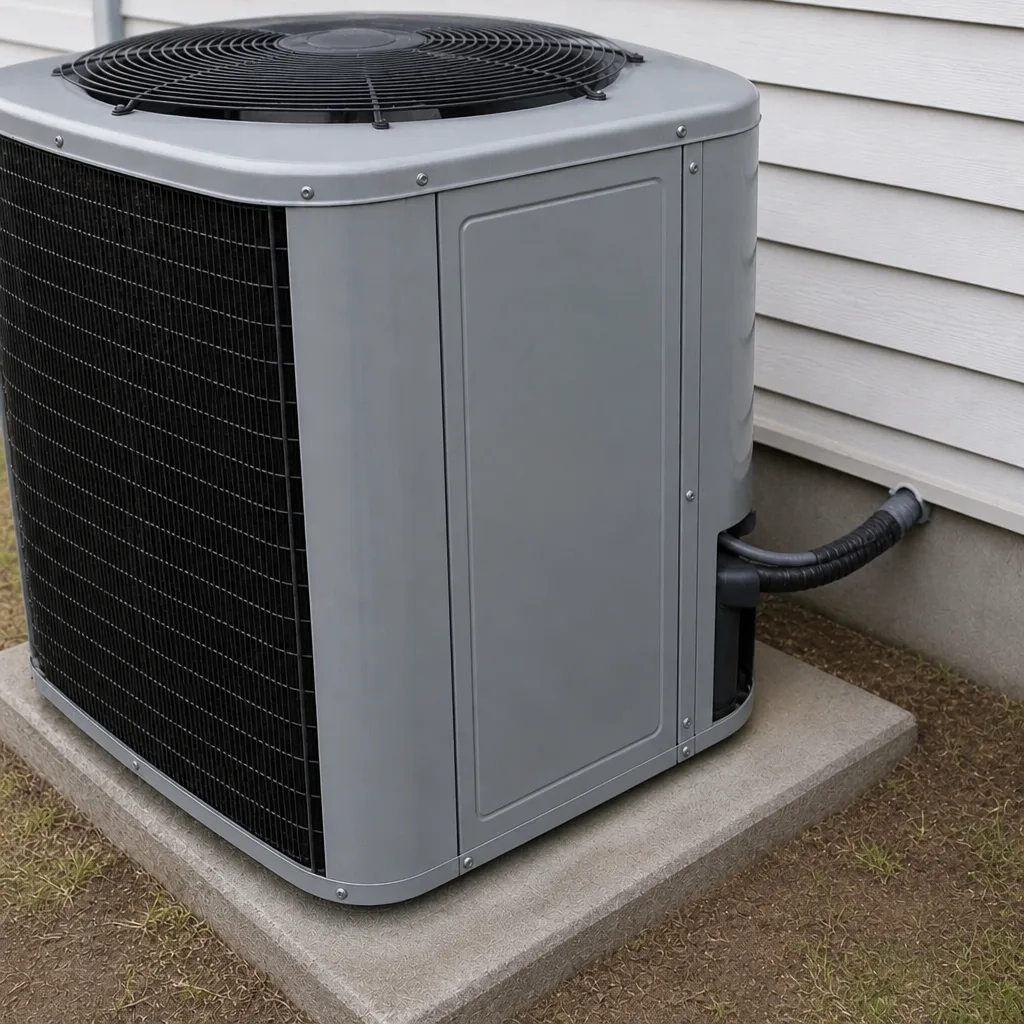
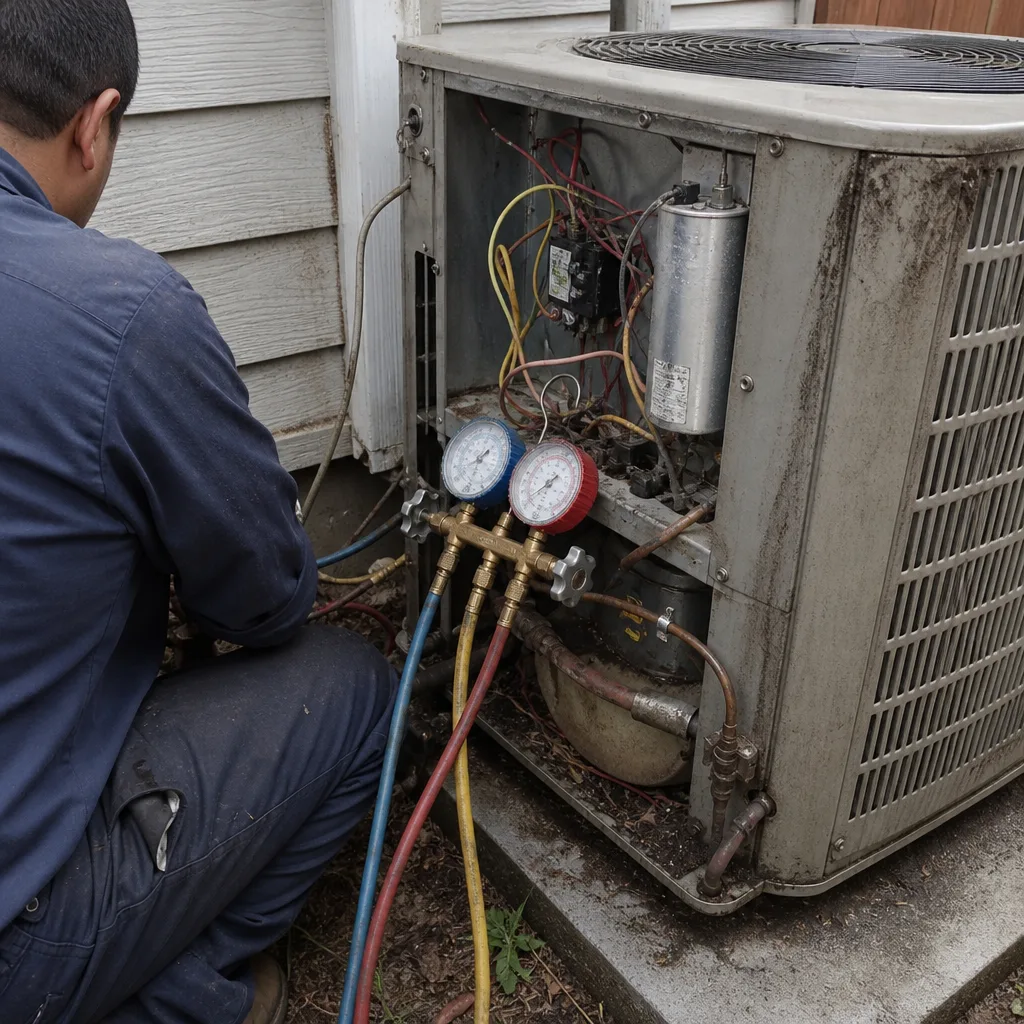
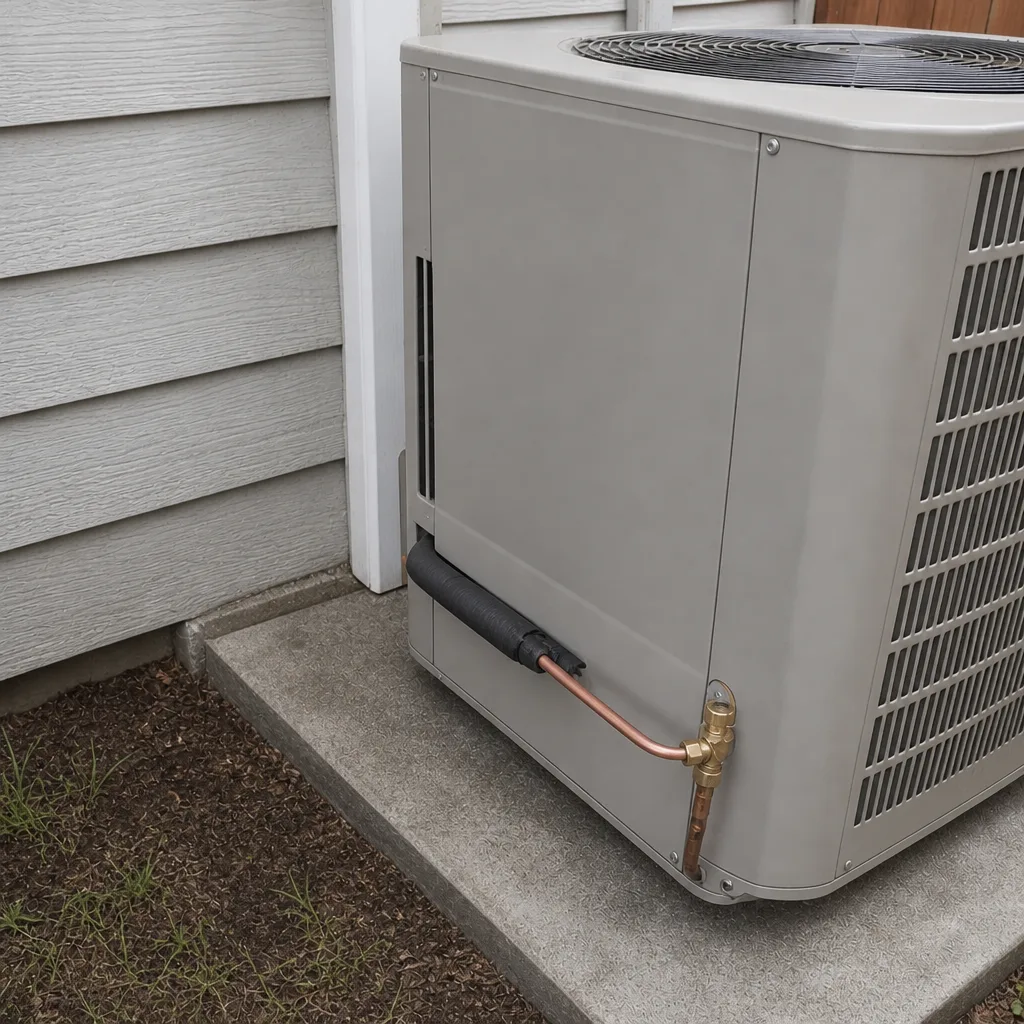
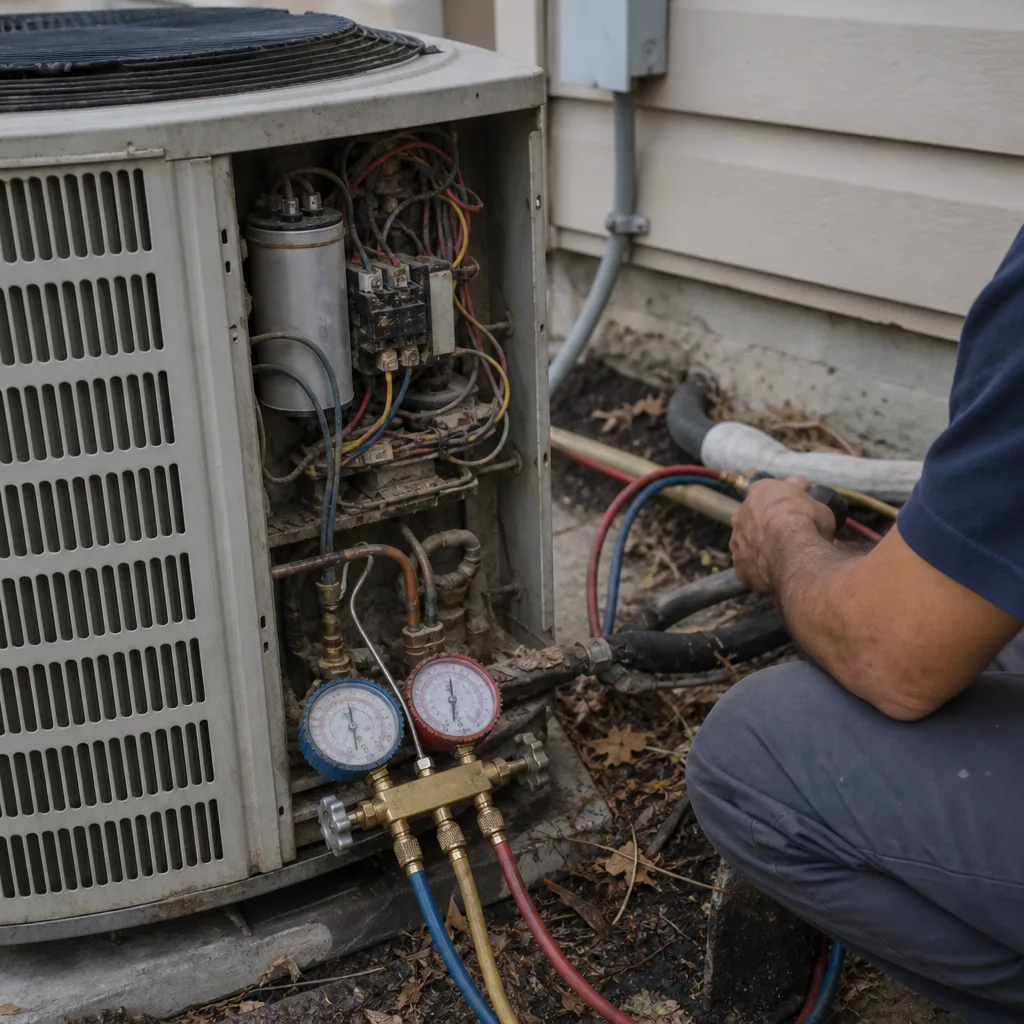
See the difference
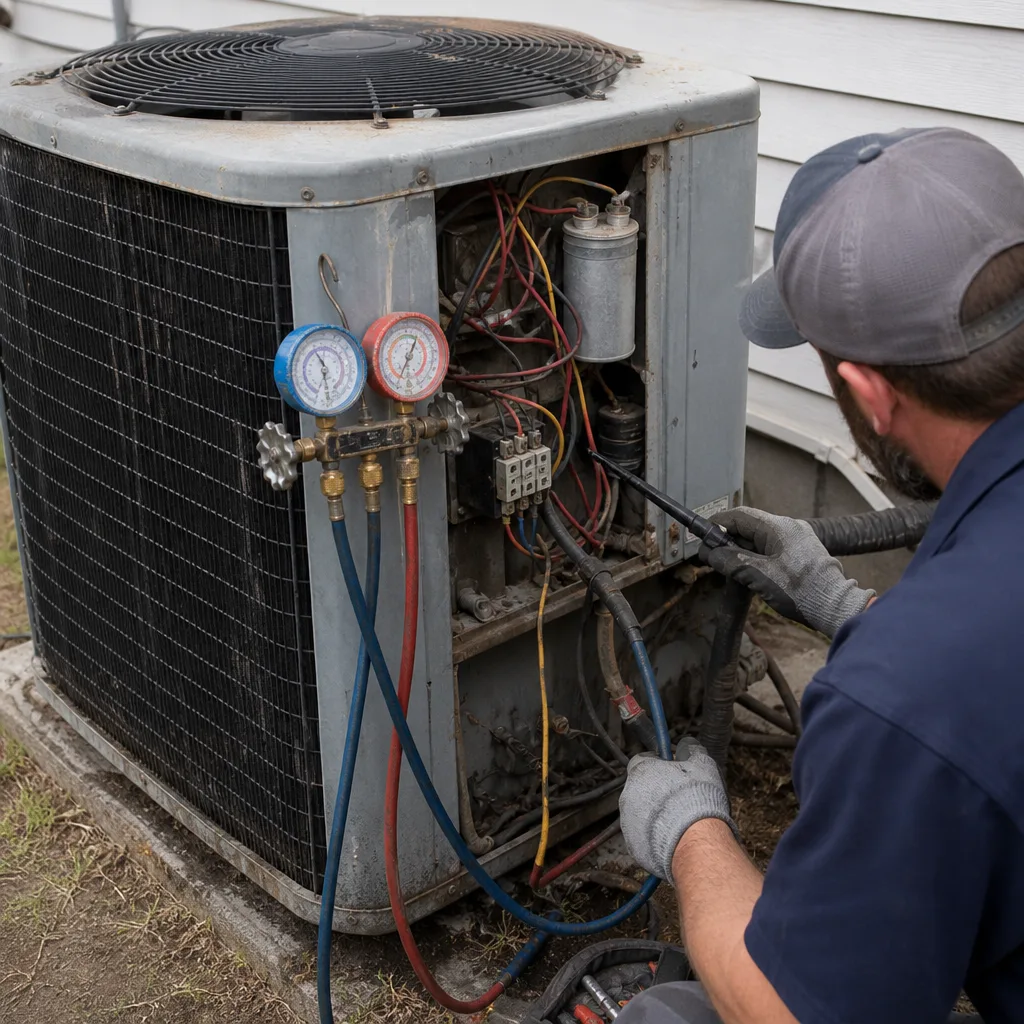 Before
 After
 Before
 After
 Before
 After
Common Mistakes to Avoid
- Replacing the filter only when you remember to. In Pearland’s dusty spring season and high-humidity summer, a filter that was fine in April is caked by June. Change it on a schedule, not on instinct.
- Assuming a tripped breaker is the whole story. A breaker that trips once is a nuisance. A breaker that trips twice in a row is signaling a real fault – usually a capacitor or a shorting contactor – and resetting it a third time risks damage. Call a technician.
- Ignoring the drain pan after a heavy storm. Clay soil movement after wet weather shifts pads and pans. If you see water near the air handler after a big rain, the drain line or pan pitch needs attention, not a wait-and-see.
- Adding refrigerant without finding the leak. A low system is a leaking system. A recharge without a leak repair is money spent on a temporary fix.
- Choosing a contractor by price alone without an itemized estimate. A quote with one lump sum can hide padding or an under-loaded system that runs harder than it should. The estimate should be itemized.
- Letting an old R-22 system limp along through its third major repair. Each repair costs more than the same repair on a modern system, and the repair bills add up fast against the price of a replacement.
- Assuming a “tune-up” is the same as a diagnostic. A tune-up checks and cleans. A diagnostic finds the cause of a specific failure. If your system isn’t cooling, you need the second, not the first.
When to Call a Professional
Some failures are DIY-adjacent. Most aren’t. Call a technician if any of these apply: the system won’t turn on after you’ve verified the thermostat, breaker, float switch, and filter are all correct; the breaker trips more than once; you see ice on the refrigerant lines or the indoor coil; the outdoor unit makes a grinding, screeching, or repeated clicking sound; the system runs but doesn’t cool; you smell refrigerant near the indoor unit; or the system is over 12 years old and this is the second significant failure in the same season. Refrigerant handling and electrical diagnosis are licensed work – we don’t recommend homeowners attempt either. AC Repair Pearland offers free estimates in Pearland – call (833) 946-7622. We answer 24/7, with fast dispatch from 7am to 7pm Sunday through Friday.
Frequently Asked Questions
What a repair costs depends on the component that failed, not on a flat rate. A capacitor or contactor replacement is on the low end; a blower motor or sealed-system repair is higher. We don’t charge a service call or diagnostic fee – estimates are free, and the written estimate sets the final price. Call (833) 946-7622 for an exact quote.
A breaker that trips more than once is usually signaling a failing capacitor, a pitted contactor, or a shorting wire, not just a worn breaker. A technician can test each component to find the source. Reset the breaker only once; if it trips again, stop and call. Call (833) 946-7622 for a same-day diagnostic.
Under 8 years old, repair is usually right unless the failure is catastrophic. From 8 to 12, weigh the repair against remaining system life. Past 12, start planning for replacement. If the repair costs more than half a new system and the unit is over 10 years old, replacement usually wins. Call (833) 946-7622 for a free assessment.
Yes. We work on Carrier, Trane, Lennox, Goodman, Rheem, York, Daikin, Bryant, and American Standard systems. The technician diagnoses the system in your home, not a brand profile. Call (833) 946-7622 to book a repair.
The combination of high humidity and slow soil movement that shifts condenser pads is a common cause. The drain line clogs faster here because of the volume of condensate, and a pan that’s out of level from ground movement overflows before a properly pitched pan would. The fix involves clearing the line and, in some cases, re-leveling the pan. Call (833) 946-7622 to have it checked.
We answer 24/7, and fast dispatch from 7am to 7pm means same-day repair is often available. A call outside dispatch hours is booked into the next opening, Sunday through Friday, 7am to 7pm. Call (833) 946-7622.
Turn the system off at the thermostat if you saw ice on the lines or heard unusual noise. Clear the area around the outdoor unit and note the symptoms – when the failure started, what it sounded like, and what changed before it started. Those details speed up the diagnosis. Call (833) 946-7622 to book.
The Bottom Line
Pearland’s clay soil and long humid summers drive failure patterns that national guides miss – pad shifting, drain pan misalignment, accelerated coil corrosion, and drain lines that clog faster than elsewhere. Knowing those patterns helps you make faster decisions before a technician arrives. Check the thermostat, breaker, float switch, filter, and outdoor unit in the first 20 minutes. Repair under 8 years, weigh the math from 8 to 12, and start planning beyond that. Read every invoice line by line and ask for itemized estimates. If your system needs attention, call (833) 946-7622 for a free estimate. We answer 24/7, with fast dispatch from 7am to 7pm Sunday through Friday.
Whatever you’re hearing, seeing, or smelling from your system, our team at AC Repair Pearland will give you a straight assessment. We work on practically every major brand and we’ll tell you whether repair or replacement actually makes sense for your home. If you’re anywhere in Pearland, call (833) 946-7622 for a free estimate. We answer 24/7, with fast dispatch from 7am to 7pm Sunday through Friday.
Written by the team at AC Repair Pearland.