
Last updated November 15, 2026
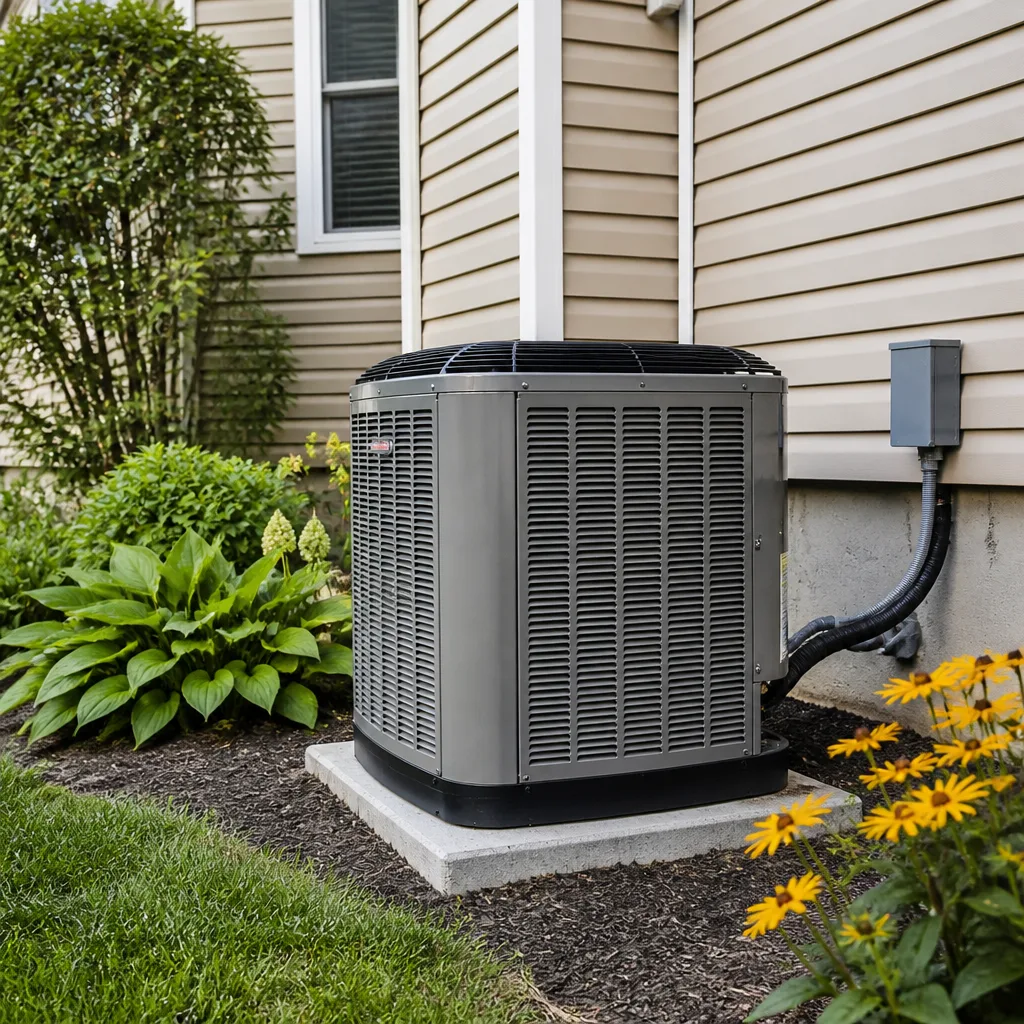 AC repair
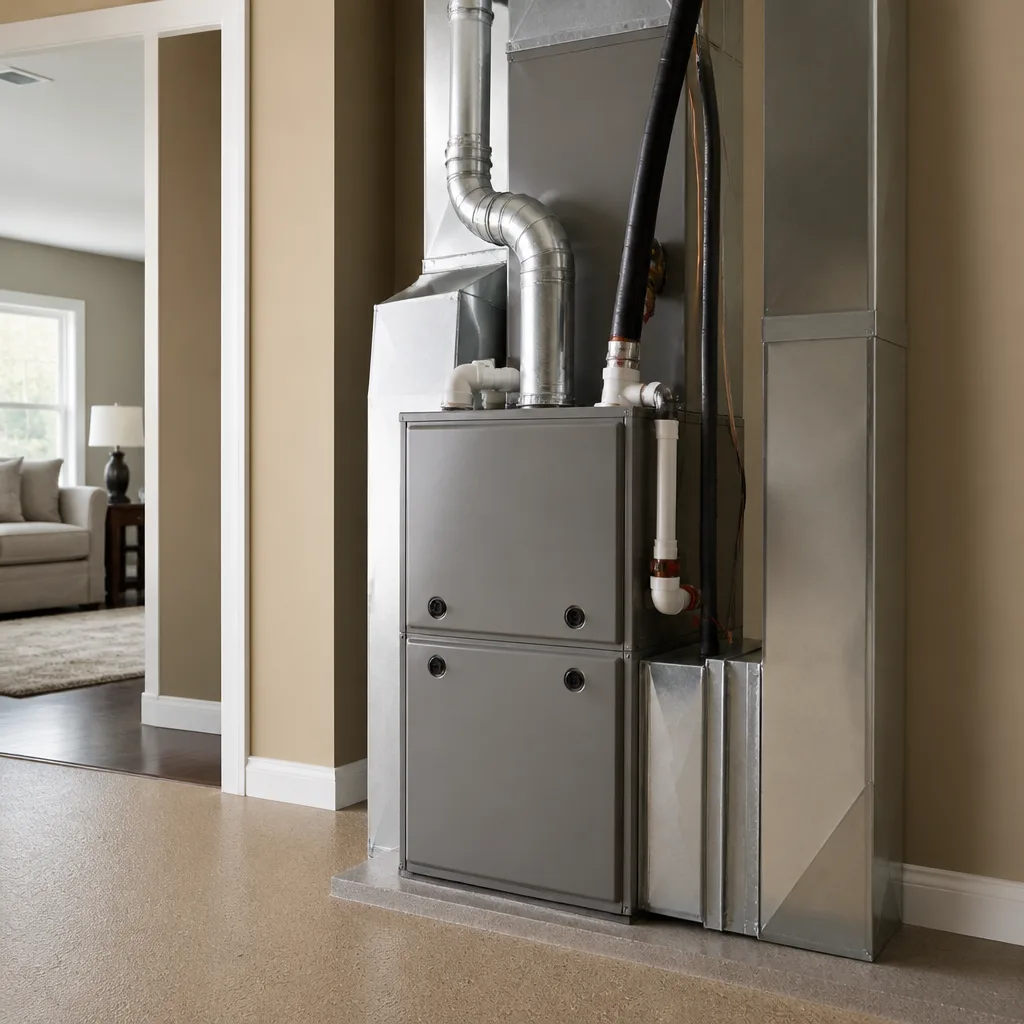 Furnace & heating
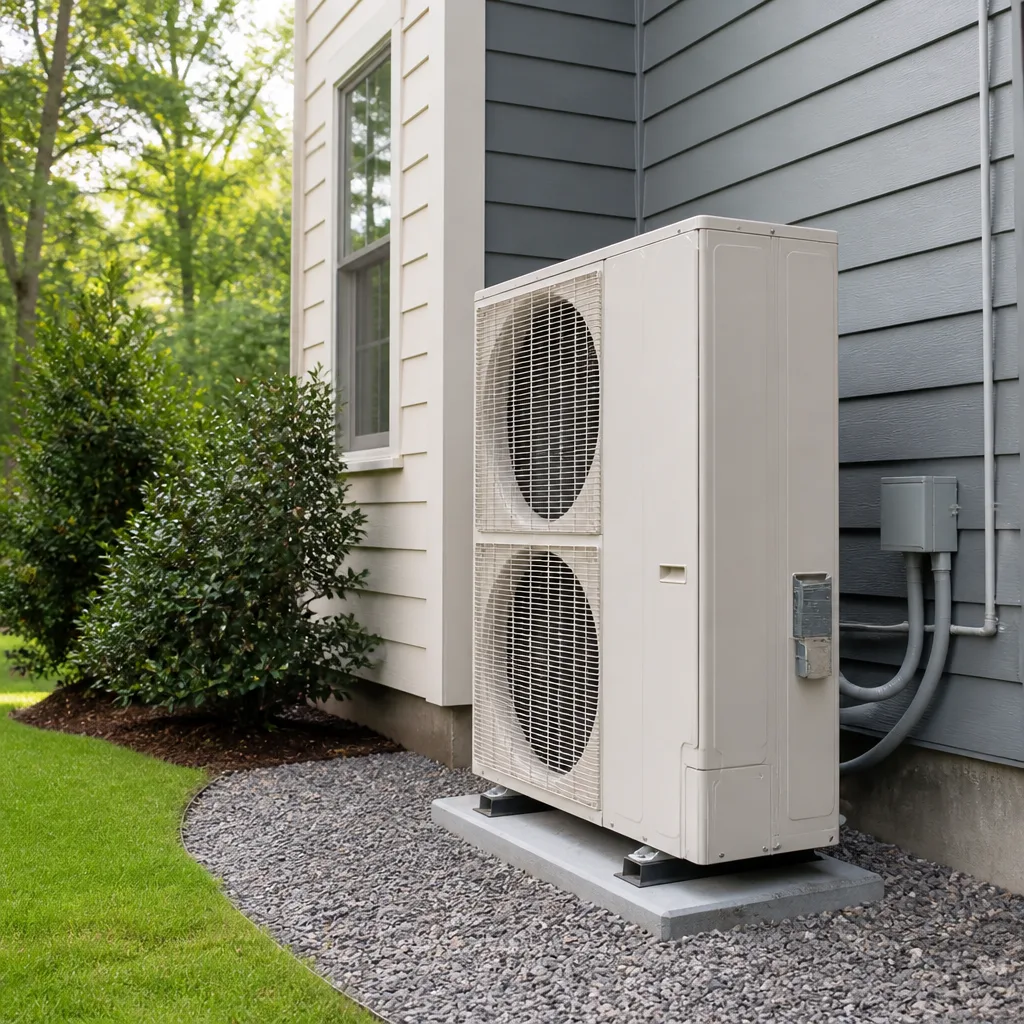 Heat pumps
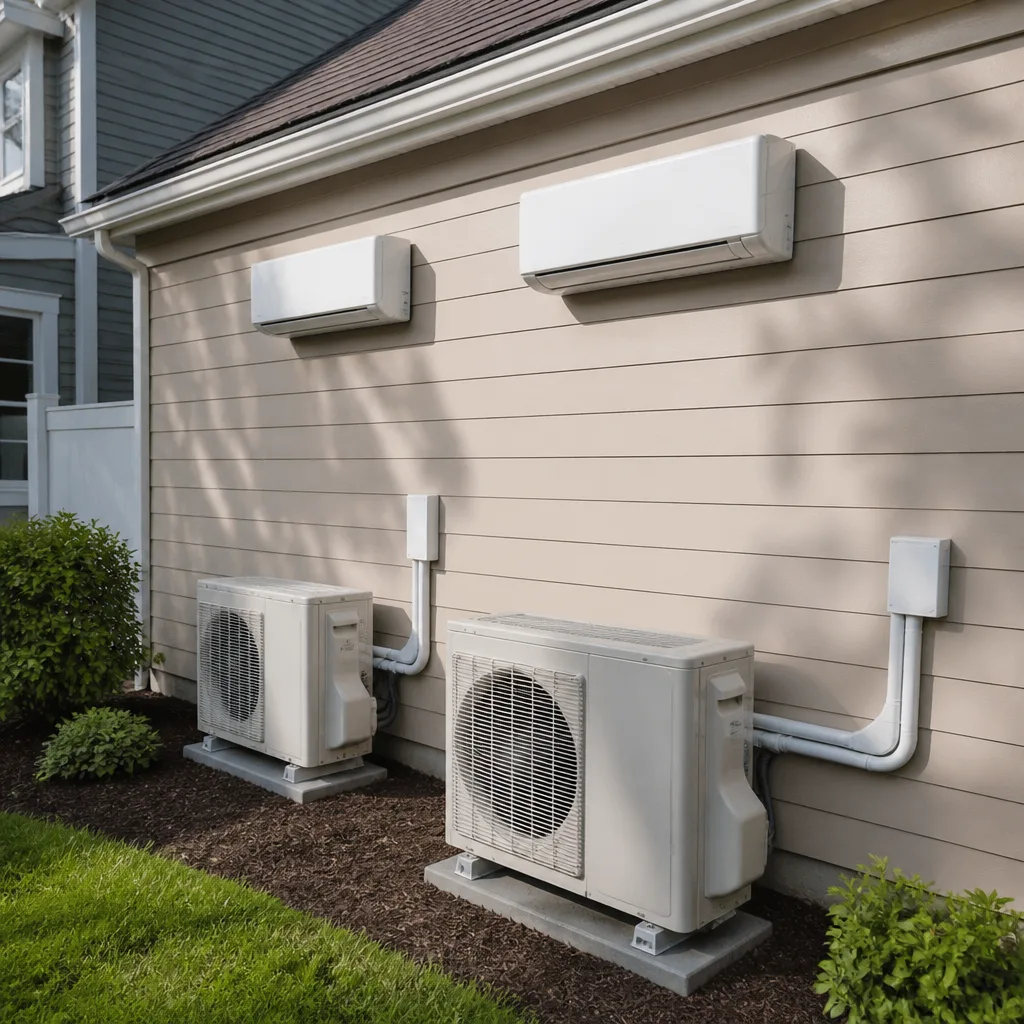 Ductless mini splits
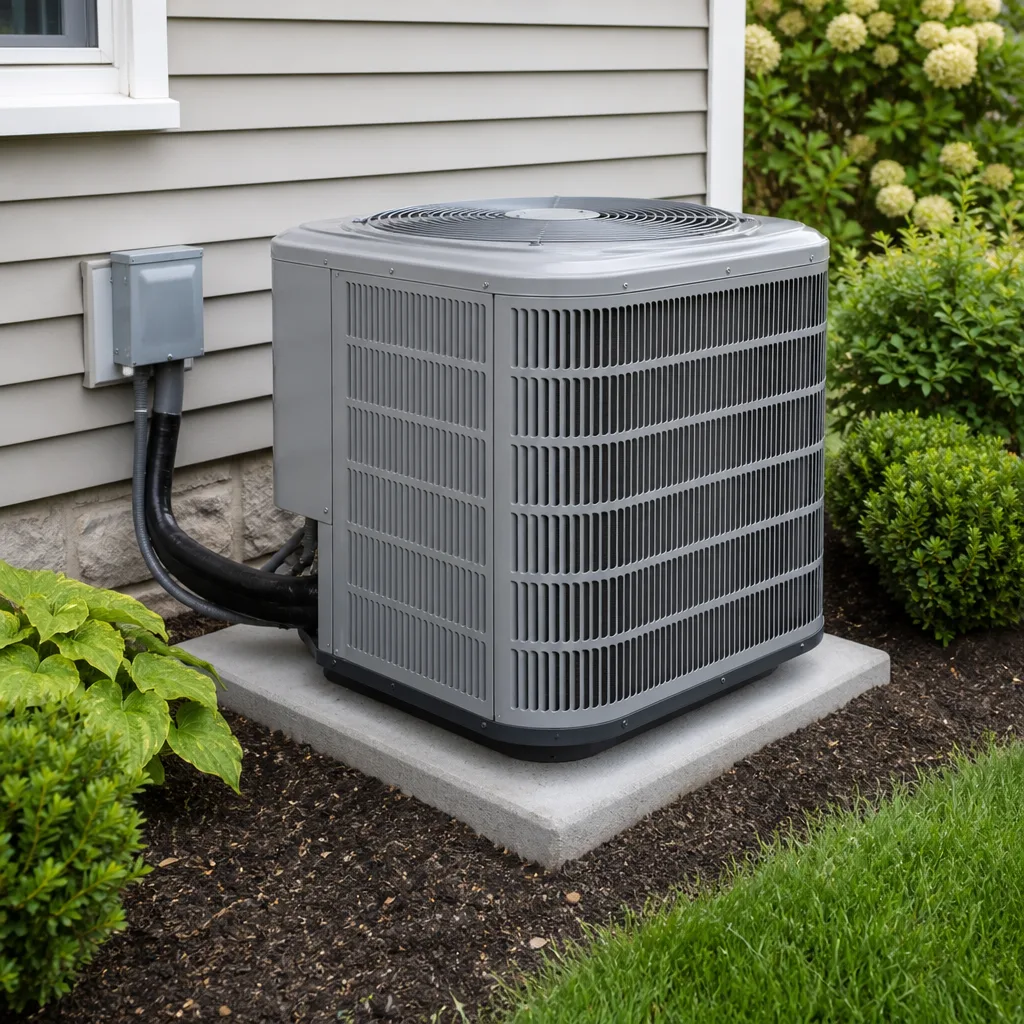 Carrier
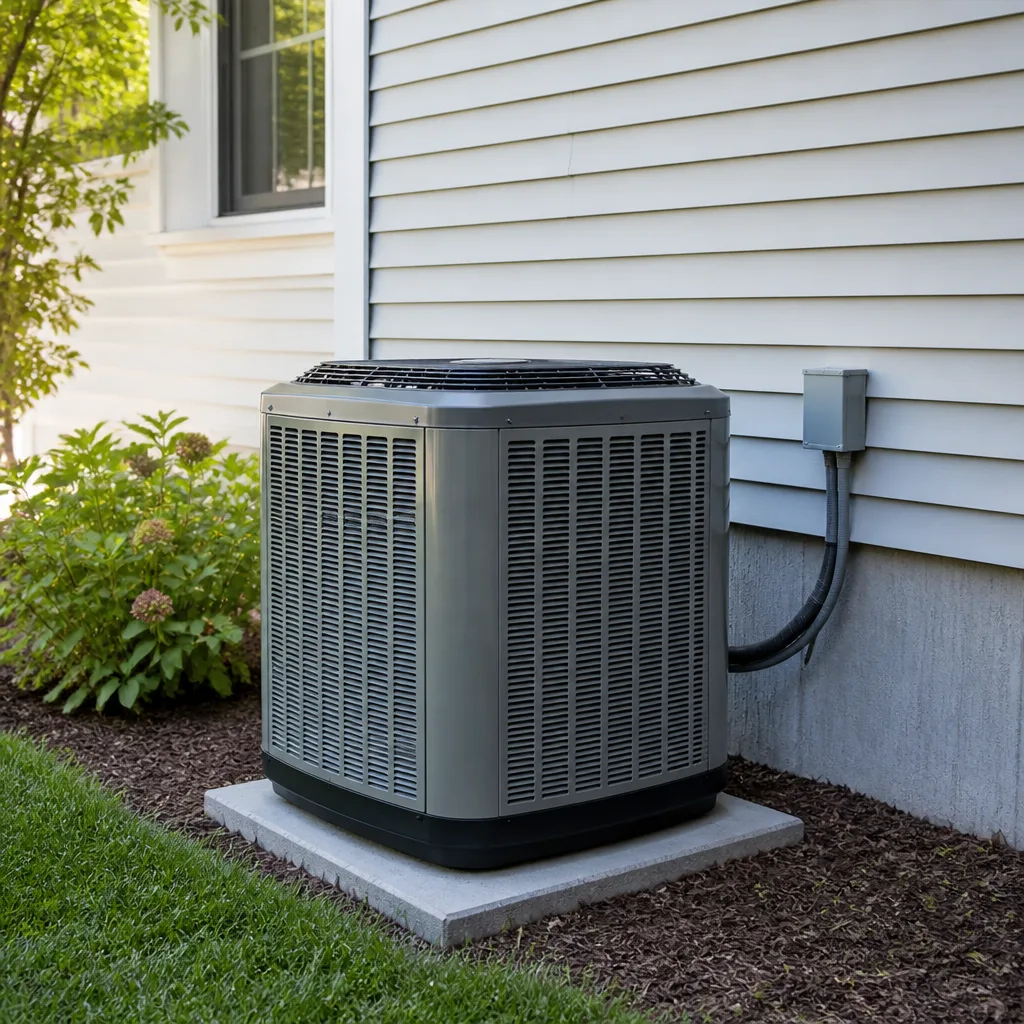 Trane
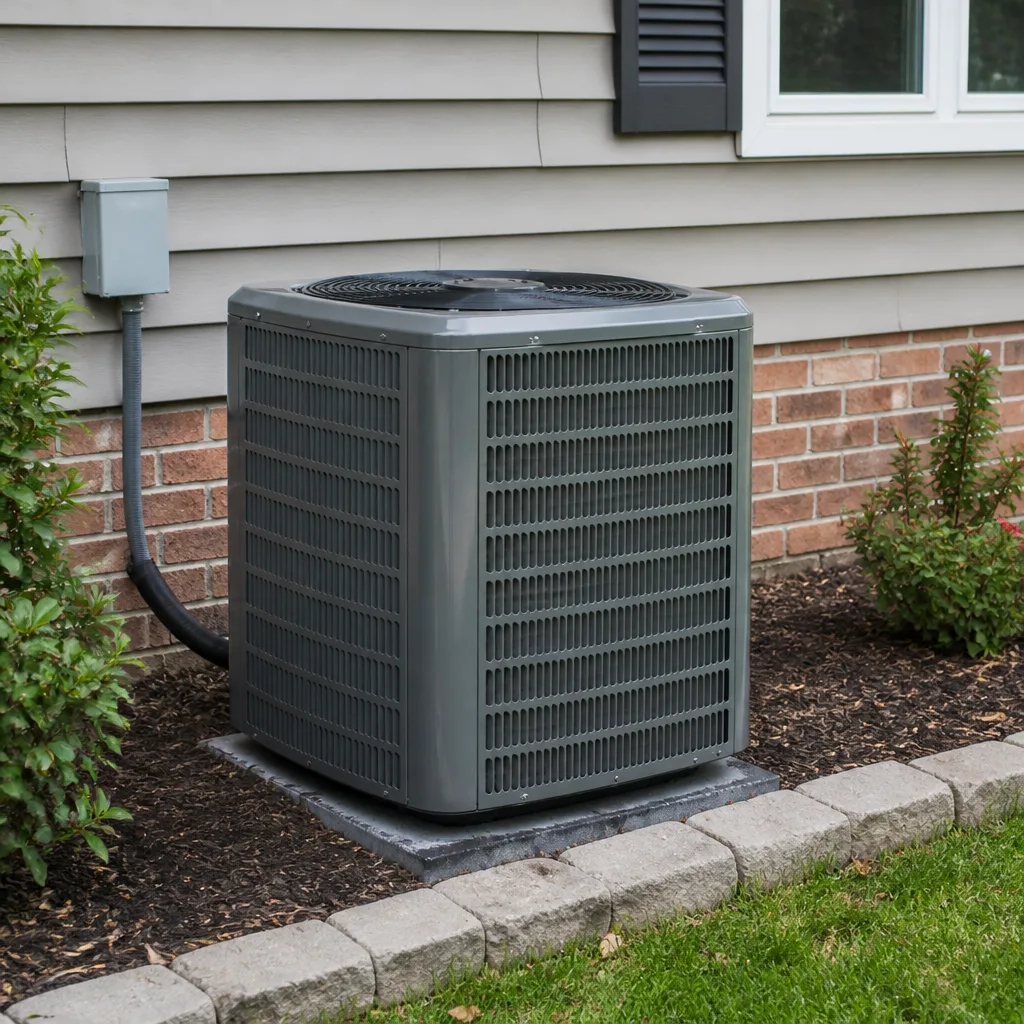 Goodman
Seasonal tune-up and full diagnostic on your Carrier, Trane, or Goodman system - readings shown to you before any repair is proposed
Diagnosis first, numbers second - you approve the repair price before a single part goes in.
Get your free estimateSeasonal HVAC Care for Pearland: Year-Round Homeowner’s Guide
Most homeowners here think about their HVAC system twice a year: when it first fails in summer and when the first cold snap hits. That’s the wrong rhythm for Pearland. Our climate doesn’t hand you four even seasons. It gives you a cooling season that starts in April and drags into October, a short mild stretch in between that’s the best maintenance window of the entire year, and the occasional hard freeze that catches equipment unprepared. The February 2021 freeze knocked out heat for thousands of Houston-area homes not because furnaces and heat pumps broke mechanically, but because nobody had serviced them for cold-weather operation in a place where cold weather felt hypothetical. This guide walks you through what your system actually needs, month by month, in this climate.
Quick Answer
Year-round HVAC care in Pearland comes down to three moves: schedule a full cooling-system service in September or October when the system comes off peak load, prep the heating side for cold-weather operation before the first freeze (defrost cycle, refrigerant charge, auxiliary heat strips), and manage humidity and thermostat behavior through the mild months so your compressor isn’t short-cycling. Our technicians have up to 8 years of experience, and we work on Carrier, Trane, Lennox, Goodman, Rheem, York, Daikin, Bryant, and American Standard equipment – your system, diagnosed correctly the first time. If you’d rather talk it through than read it, call (833) 946-7622. We answer 24/7.
Styles & brands we work with
- AC repair
- Furnace & heating
- Heat pumps
- Ductless mini splits
- Carrier
- Trane
- Goodman
Table of Contents
- Why Pearland’s Climate Doesn’t Give You Four Equal Seasons
- Why September and October Are the Highest-Value Maintenance Window
- Heat Pump Cold-Weather Prep Before the First Freeze
- Winter Humidity: Why Pearland Homes Still Need Dehumidification
- Post-Storm Protocols After Spring Severe Weather
- The Shoulder-Season Thermostat Strategy
- Getting Through the Long Cooling Season
- Your Brand, Your System, One Call
Why Pearland’s Climate Doesn’t Give You Four Equal Seasons
Pearland sits in a stretch of Southeast Texas where the cooling load dominates the year. Run the numbers on how many hours your compressor actually turns over and you’ll find the pattern: the system earns its keep from roughly April through October, works moderately in the shoulder months, and then gets called on for heat in short, intense bursts when a cold front pushes through in December, January or February.
That uneven pattern has consequences. It means wear and tear on your cooling side is concentrated and heavy. It means your heating side sits idle long enough to develop problems nobody notices until the night you need it. And it means the mild months, the ones people mentally skip, are when the most useful maintenance work gets done.
In our experience across Pearland neighborhoods, the systems that make it through a full summer without a breakdown are almost never the newest ones. They’re the ones that got looked at in the shoulder season, before the load came back on. A tune-up in April is not useless, but it’s late. The system is already carrying the load, and if a capacitor or a contactor is on its way out, you’re finding out in July instead of in October.
Homeowners here also inherit assumptions from other climates. People who moved from somewhere with real winters expect a defined “heating season.” In Pearland, heating season is a handful of scattered cold spells. That makes cold-weather readiness a short task but an easy one to defer, and deferring it is exactly what turned the 2021 freeze into an HVAC event for so many homes.
Why September and October Are the Highest-Value Maintenance Window
September and October are the single best months of the year to have your cooling system serviced in Pearland. Your system has just been through its heaviest stretch of the year, so any wear is fresh and visible. Demand on technicians eases as the peak cooling rush fades, so scheduling is easier. And parts availability tends to be better than in spring, when every shop is restocking for the season and half the region books service at once.
Here’s what a fall cooling-system service should actually include, and what to ask about when you book one:
- Refrigerant charge check. A system that ran all summer with a slightly low charge has been working harder than it should. Checking the charge in the fall confirms whether there’s a leak to find before next season.
- Capacitor and contactor inspection. These are the parts that fail most often in this climate, and they fail quietly until the system won’t start. A technician can often spot a weak one before it strands you.
- Condenser coil cleaning. Coils caked with dust and yard debris force the compressor to run hotter and longer. Cleaning after peak season pays for itself in efficiency through the shoulder months.
- Drain line clear and float switch check. In a humid climate the condensate drain works constantly. A clogged line or a stuck float switch shuts the system down for a reason that has nothing to do with cooling.
- Blower and filter review. A dirty blower wheel cuts airflow and drives up static pressure. Filter condition at the end of summer tells you a lot about the system’s whole air-side health.
If fall service turns up something big, you have time to weigh repair against replacement without a deadline hanging over you. That calm window is worth more than people realize. It’s the difference between a decision made on facts and a decision made in July with the house at 85 degrees.
Heat Pump Cold-Weather Prep Before the First Freeze
A heat pump is a good fit for the Pearland climate, but it has to be set up to run in cold weather, and that setup is easy to skip in a place where most winters feel warm. The February 2021 freeze is the clearest lesson: plenty of heat pumps didn’t fail because of a broken part. They failed because they’d never been serviced for cold-weather operation, so nobody knew whether their auxiliary heat would actually come on.
Cold-weather prep for a heat pump has three core pieces:
- Defrost cycle testing. A heat pump running in heating mode builds frost on the outdoor coil and periodically reverses to melt it. If that cycle doesn’t run correctly, the coil ices up and the system stops heating. Testing it in mild weather is the only way to know it works before you need it.
- Refrigerant charge verification. Heat pump performance depends on correct charge, and charge problems show up differently in heating than in cooling. A check in heating mode catches what a summer-only check would miss.
- Auxiliary heat strip verification. When outdoor temperatures drop far enough, the system calls on backup electric heat strips. If a strip or its sequencer has failed, you get cold air and a bigger electric bill, and you find out on the coldest night of the year.
Note that a heat pump and a gas furnace want different prep. Furnace prep centers on the heat exchanger, the burners, the igniter and the flue. We handle both furnace repair and heat pump repair, so whichever system is in your home, the prep matches the equipment. If you’d rather have us take a look before the cold arrives, AC Repair Pearland is where to start. Free estimates, and fast dispatch from 7am to 7pm.
Winter Humidity: Why Pearland Homes Still Need Dehumidification
This is the section most seasonal HVAC advice skips. In much of the country, winter means dry air and static shocks. In Pearland, the humidity outside often stays high enough that a house with the windows closed and the heat running can still sit in a mold-friendly humidity range, especially after a stretch of warm, rainy days in December or January.
Two things cause this. Gulf-influenced air holds moisture even in cooler months, and a house that’s been sealed up tight holds onto it. Meanwhile, your heating system, whether a heat pump or a furnace, doesn’t remove moisture the way air conditioning does. A heat pump running in heating mode may or may not manage humidity depending on how it’s set up; a furnace doesn’t touch it at all.
What that means for your settings:
- Don’t treat the thermostat as the only control. A single setpoint on a thermostat doesn’t manage humidity. If your home has separate humidity control, use it.
- Watch indoor humidity in the 55% and above range. When it sits there for days, that’s the point to look at dehumidification options rather than just turning the heat up.
- Run the fan or cooling cycle intentionally. In the shoulder months, a short cooling cycle removes moisture even when you don’t need temperature relief. Constant fan operation with a dirty filter, on the other hand, recycles humid air.
- Verify your system supports it. Some thermostats and controls handle dehumidification; some don’t. Knowing which you have tells you what to expect from winter.
If you find your indoor air feeling sticky in December, talk to us before you buy anything. We’ll tell you honestly whether your existing setup can manage it or whether something else is going on with the system.
Post-Storm Protocols After Spring Severe Weather
Pearland gets its share of spring storms, and the outdoor unit is the most exposed piece of equipment on your property. When a storm rolls through, the condenser cabinet takes whatever the wind brings. Most of what we look for after a storm is invisible from the street.
Here’s what to check after a spring storm, and what to ask a technician to verify:
- Condenser fins. Hail and flung debris bend fins and pinch the coil. Bent fins reduce airflow and cut efficiency. A technician can assess the damage and straighten much of it.
- Cabinet and debris. Leaves, twigs and roof grit collect in the cabinet and against the coil. Debris against the coil is one of the most common causes of a hot running system in July.
- Electrical surge effects. A nearby strike or a power fluctuation can damage a capacitor, a contactor, a control board or a compressor’s electrical parts. If your system runs but behaves oddly after a storm, get it checked rather than waiting for it to fail.
- Loose disconnects and wiring. Wind alone rarely damages wiring, but power surges and physical debris can. Loose connections show up later as intermittent failures.
- The pad and mounting. A torrential rain can undercut a pad, and a settled or tilted unit vibrates and wears faster.
The period right after spring storms is also a good time to have a technician look at the system as a whole. If we find a problem, we’ll tell you whether it’s repair or replacement territory. That’s the whole point of how we operate: you get a straight assessment before any work begins.
The Shoulder-Season Thermostat Strategy
Pearland’s mild fall and spring days are where a lot of compressor life gets lost, and it happens invisibly. On a day that hovers in the low 70s, a thermostat set too low causes the system to cycle on and off rapidly. That short-cycling is hard on the compressor, the most expensive part in the system, and it wears out other components along the way.
A better approach for the shoulder months:
- Set your cooling setpoint closer to the outdoor temperature in mild weather. A setpoint a degree or two higher than the outdoor temperature on a mild day keeps the system from fighting the weather.
- Avoid big manual jumps. Dropping the setpoint five degrees when you come home from work triggers a long, hard run. Setting it and leaving it lets the system respond gradually.
- Use the fan setting deliberately. Running the fan on “low” or “auto” rather than constant high speed keeps humidity managed and cuts short-cycling.
- Check the filter first. A dirty filter makes short-cycling worse by choking airflow. It’s the cheapest maintenance step there is.
- If cooling still runs like that in mild weather, get it looked at. Short-cycling in the shoulder months can also be a sign of an overcharged system, a failing thermostat or a stuck reversing valve on a heat pump.
Many thermostats have program settings that suit this pattern; many others don’t. We’ll tell you honestly which one you have and whether a different thermostat would make a difference, without pushing an upgrade you don’t need.
Getting Through the Long Cooling Season
By April, the long cooling season is underway in Pearland, and it won’t really loosen its grip until October. There are a few habits that make the difference between a smooth summer and a breakdown in the hottest week of the year.
- Change the filter regularly. A dirty filter drives up static pressure and strains the blower. In a long cooling season, change it on a schedule rather than when you think of it.
- Keep the outdoor unit clear. Give the condenser room to breathe. Trim back vegetation and clear yard debris from the cabinet and pad.
- Watch the drain line. A condensate line that runs constantly in humid summer weather is one of the most common causes of a mid-summer shutdown. Pour a cup of water through the drain now and then to confirm it flows freely.
- Listen for changes. A new rattle, a hum that stops suddenly, a fan that sounds different: these are warning signs worth a look before they become a failure.
- Don’t wait out a small problem. A system that isn’t cooling as well as it used to, or is running longer than usual, is telling you something. If it needs AC repair, getting it early is almost always less expensive than waiting.
If the answer is that the system is at the end of its life and a replacement makes more sense than another repair, we’ll tell you that too. We present repair and replacement options transparently so you can make an informed decision. And if you want a AC installation done right, we recommend the equipment that fits your home’s needs and your budget, not the brand with the biggest manufacturer incentive.
Your Brand, Your System, One Call
Here’s a piece of how the HVAC industry works that most homeowners don’t hear about: many shops align tightly with one or two manufacturers. That alignment shapes what they recommend, whether or not it’s the right fit for your home. We do the opposite. We’re brand-agnostic on installation recommendations, and we service equipment from Carrier, Trane, Lennox, Goodman, Rheem, York, Daikin, Bryant, and American Standard.
That range matters most when you’re in trouble. A homeowner with a Rheem heat pump that’s not heating, or a York system that’s not cooling, shouldn’t have to wonder whether a technician actually knows that equipment. We diagnose the system in your home, not a preferred brand’s spec sheet.
We also focus on HVAC alone. We don’t split our technicians across plumbing, electrical or general handyman work. Heating and cooling are our whole practice, and that focus is what lets us give a genuine assessment of whether a repair or a replacement is the right move. Nine brands, one call, and a straight answer. If your equipment is one of the nine, we’ll take care of it.
Call (833) 946-7622 for a free estimate anywhere in Pearland. We answer 24/7, and fast dispatch runs from 7am to 7pm.
Common Mistakes to Avoid
- Skipping fall service because the system still works. A system running fine at the end of summer is exactly the one you want to have checked, because the wear is fresh and visible and the fix is cheap. Waiting until it fails in July is how small problems become big ones.
- Never testing the heat until it’s needed. The February 2021 lesson, in one sentence. Test the heating side in the fall, before you need it.
- Treating the thermostat as a light switch. Big manual setpoint jumps in mild weather are a direct route to short-cycling. Set it and leave it.
- Ignoring winter humidity. In Pearland, a closed-up house in December can still sit in mold-friendly humidity. If it feels sticky in the winter, look into it.
- Pulling debris out of the condenser with the power on. The condenser has high-voltage components inside. Never reach into the cabinet with the power on; turn the system off at the breaker and let a technician handle anything inside the enclosure.
- Accepting a brand pitch you didn’t ask for. If a quote recommends a system that fits your home and budget, good. If it recommends a brand because that’s what the shop sells, ask why. We’ll always explain the reasoning.
- Waiting out a small cooling problem. A system that’s running longer than usual or isn’t keeping up is telling you something. The fix early is almost always smaller than the fix late.
See the difference
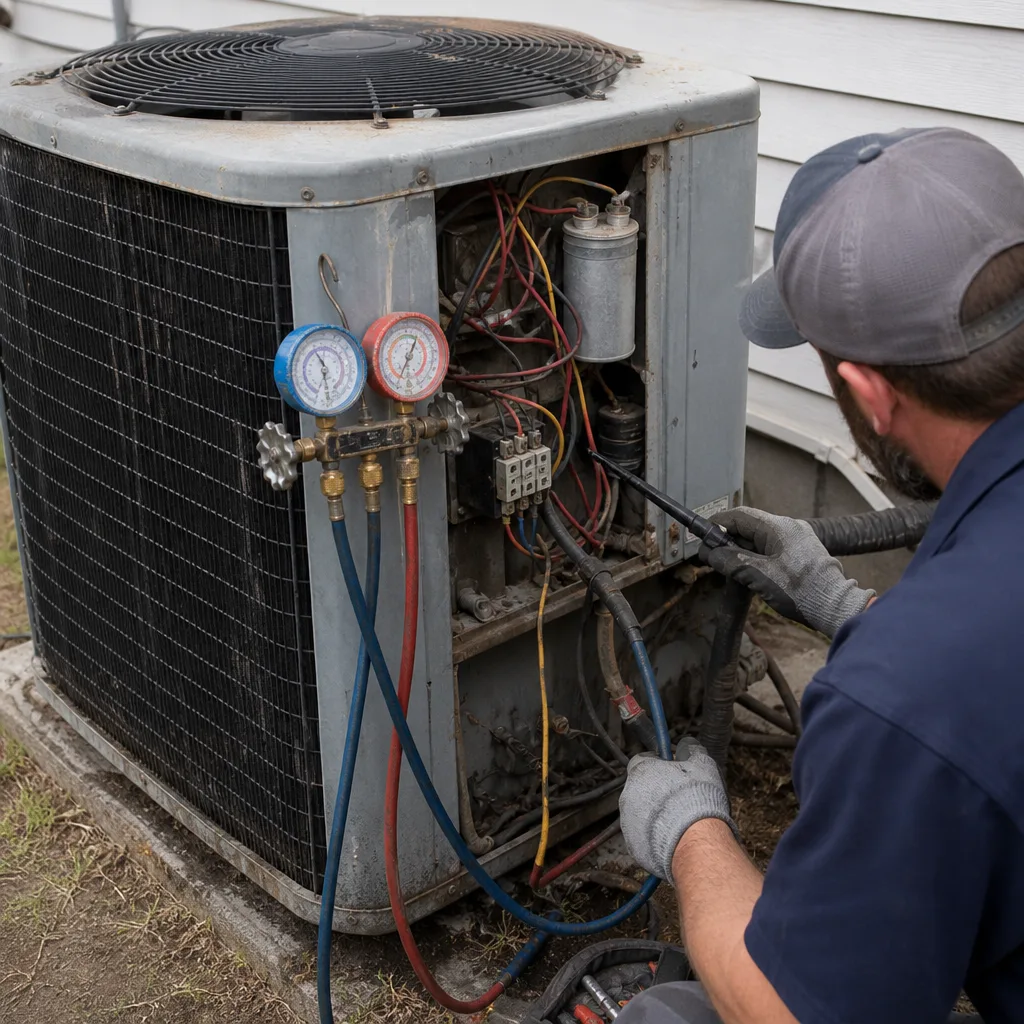 Before
 After
 Before
 After
 Before
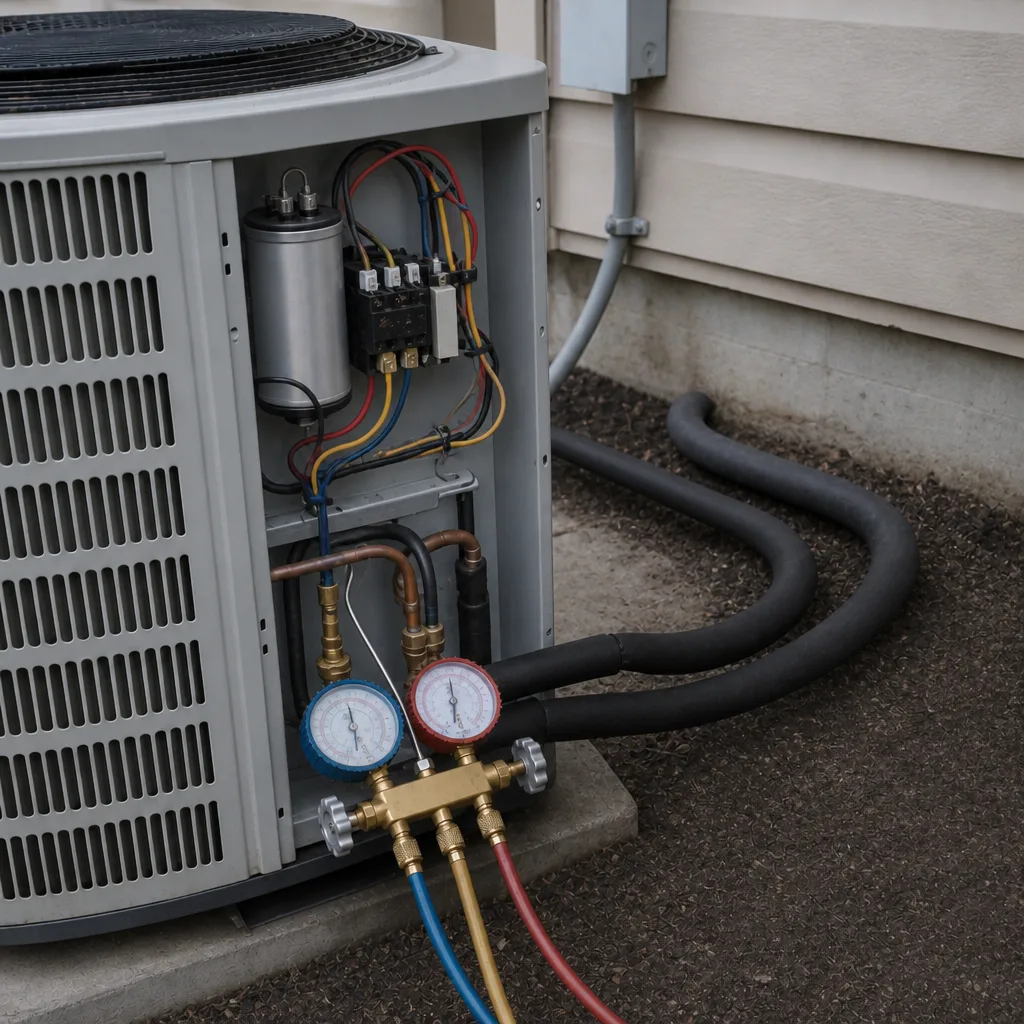 After
When to Call a Professional
Some seasonal maintenance you can handle yourself: filter changes, keeping the outdoor unit clear of debris, making sure the drain line flows. The rest is worth a call. Call a professional when your system isn’t keeping up with the temperature you’ve set, when you hear a new noise or smell something burning, when your heat pump runs in heating mode but the air isn’t warm, or when you want the system checked before an expected freeze. Also call if your energy bill jumps without a change in habits; a system working harder than it should is often the reason. And if you’re weighing repair against replacement, get a straight assessment before you spend anything. AC Repair Pearland offers free estimates in Pearland, so call (833) 946-7622. We answer 24/7 and dispatch fast from 7am to 7pm, Sunday through Friday. If you need a service area check, our Pearland page has the details.
Frequently Asked Questions
Twice a year is the practical answer here: once in the fall after the cooling season and once before the first expected freeze to check the heating side. The fall visit is the higher-value one in this climate, because the system has just carried its heaviest load and any wear is easiest to find. If you can only do one, book the fall visit. Call (833) 946-7622 to schedule; estimates are free.
Yes, because the parts that fail in cold weather are hard to test in warm weather. Defrost cycle behavior, refrigerant charge in heating mode and auxiliary heat strip function all need to be checked before you need them. A heat pump that worked fine last winter can still have a weak capacitor or a failed strip waiting to show up. Call (833) 946-7622 for an estimate.
Because the air outside holds moisture even in cooler months, and a closed-up house holds onto it. Your heating system doesn’t remove humidity the way air conditioning does, so it can build up. If it stays in the 55% and above range for days, it’s time to look at the controls or dehumidification options. We’ll tell you what your system can do; call (833) 946-7622.
Yes. Hail and wind can bend condenser fins, drive roof grit and debris into the cabinet, and power surges can weaken electrical components without stopping the system entirely. A system that runs but behaves differently after a storm should be checked. Call (833) 946-7622 for a free estimate.
We service Carrier, Trane, Lennox, Goodman, Rheem, York, Daikin, Bryant, and American Standard. If your system is one of those nine, we’ll diagnose the system in your home rather than working from a single brand’s spec sheet. Call (833) 946-7622 and tell us what you have.
That depends on the age of the equipment, the cost of the repair, and how the rest of the system is holding up. We give a straight assessment of both paths before any work begins, so you can decide with real information. If replacement is the answer, we recommend what fits your home’s needs and budget. Call (833) 946-7622 for a free estimate.
The Bottom Line
Pearland doesn’t give your HVAC system four equal seasons. It gives it a long, heavy cooling season, a short mild stretch when the best maintenance work can happen, and occasional hard freezes that catch systems unprepared. The fall service is the highest-value visit of the year because the wear is fresh and parts are easier to get. Heat pump cold-weather prep is a must, not a maybe. Winter humidity is real here, so treat it that way. Storm-season checks pay off in July. And the shoulder-season thermostat strategy extends compressor life quietly, one cool day at a time. A little maintenance now saves a lot of emergency later.
If you want help mapping this out for your own system, call (833) 946-7622 for a free estimate. We answer 24/7, dispatch fast from 7am to 7pm, and we work on your brand, not just ours.
Written by the team at AC Repair Pearland.